
Keep Pillowcases with Their Duvet Cover Through Unpacking
Compare inner-bundle arrangements that keep approved pillowcase types with the correct duvet cover when several bedding sets are unpacked together.
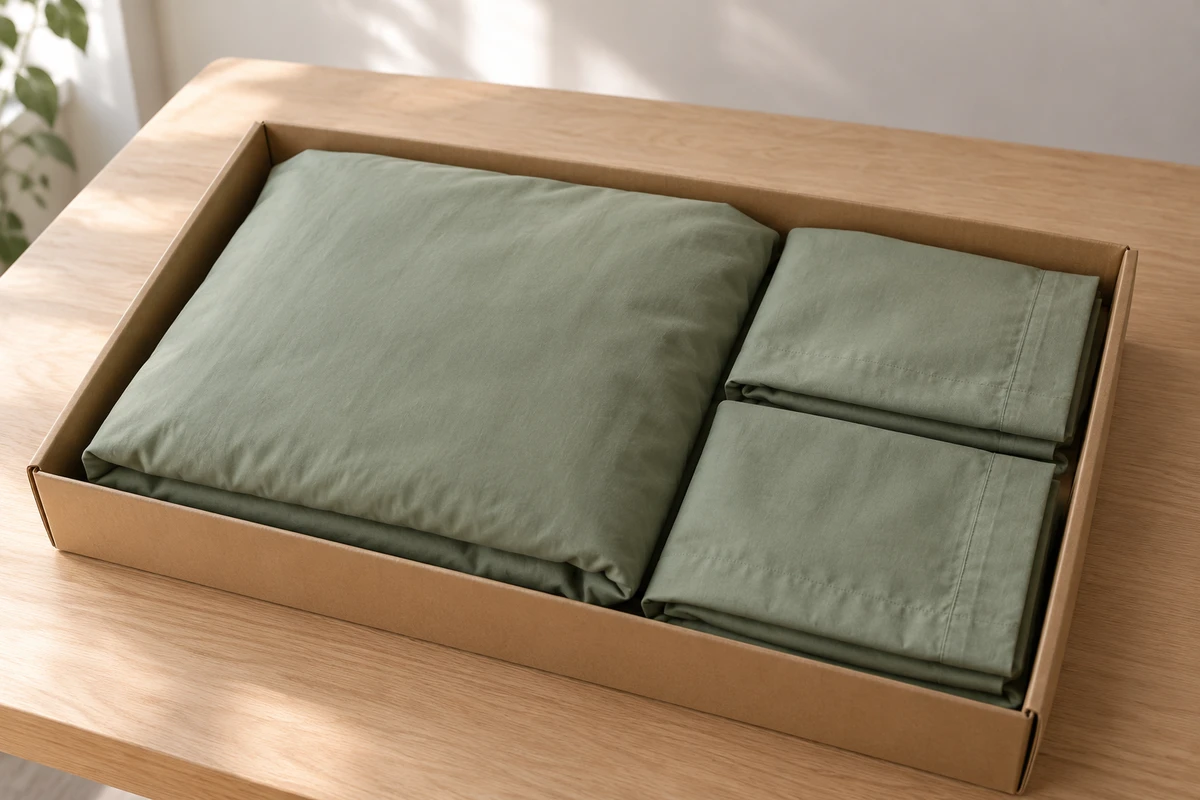
A duvet set can remain correctly counted while losing its useful identity at unpacking. When two covers are opened together, their pillowcases may become one undifferentiated pile. Choose the inner bundle around the moment the cases become separate from the cover, especially when the approved sets contain similar-looking cases of different types.
Begin with an already approved assortment. This decision keeps those pieces associated through opening; it does not change pillowcase dimensions, add spare pieces or establish whether a cover fits an insert. The practical outcome is a named packing proposal that tells the next person where each case type belongs and when it becomes recoverable.
Follow the cases beyond the outer set label
Identify the cover-set variant and each included pillowcase type using the accepted component references. Describe any case distinction the recipient must preserve, such as a different approved length or border treatment. A general colour name is insufficient if both set variants use the same fabric.
Then describe the intended unpacking job. A retail customer opening one set immediately has a different association problem from a hospitality buyer opening several sets on one table. Record whether the cover is expected to leave the inner bundle before the cases, and whether the original outer packaging remains nearby. Do not assume that the printed set label will remain attached to goods after that packaging is discarded.
The product openings remain product features. IKEA’s PILTANDVINGE example has press studs on the duvet cover and envelope closures on the pillowcases. Those different openings do not themselves define a place to store the cases within a shipping bundle. IKEA PILTANDVINGE product details
Compare the two inner positions
One proposal places the cases within the cover’s approved folded arrangement. The recipient encounters one combined soft bundle, but the cases may remain hidden when the cover first leaves the wrapper. Ask which ordinary, permitted opening stage exposes them. “Inside the cover” needs clarification: inside a fold and inside the duvet’s insert compartment describe different arrangements. Do not let an ambiguous phrase become a packing instruction.
A second proposal puts the cases in an identified sleeve alongside the cover, within the same inner grouping. This can make the separate case component apparent earlier. It also creates a new question: what connects that sleeve to its cover after the common wrapper is gone? A sleeve visible in the initial layout may become anonymous when put beside another set’s sleeve.
| Arrangement to review | Case recovery point | Association question | Decision still needed |
|---|---|---|---|
| Cases within the approved cover fold | When the specified fold is opened | Can the cases remain attributable if the cover moves first? | Exact position and permitted recovery sequence |
| Identified sleeve beside the cover | When the common inner grouping is opened | Does the sleeve retain the approved set identity? | Sleeve location, identification and contact review |
| Shared case group outside individual sets | Separate allocation before use | Who reconnects each case type to its cover? | Buyer approval of that additional allocation task |
A shared group may describe a consciously chosen bulk-handling arrangement, but it should not be presented as equivalent to complete individually recoverable sets. If the recipient expects one complete inner bundle, return the shared proposal for revision.
Make the case-recovery worksheet concrete
Use one row per approved set variant. Keep proposal and observed mockup entries distinct; a drawing records intention, while an identified mockup can show only its represented state.
| Worksheet field | Entry to complete | What the answer should settle |
|---|---|---|
| Cover-set variant | Accepted cover and assortment reference | Which complete set this row describes |
| Approved case types | Component references and included counts | Which soft pieces must stay associated |
| Cases inside or alongside cover | Exact proposed location and sleeve reference, if used | Where the recipient should find them |
| Opening stage exposing cases | Named ordinary stage under applicable handling instructions | Whether cases are available before the cover leaves |
| Association after outer wrap removal | Remaining approved cue or physical grouping | How the correct relationship survives opening |
| Unresolved pack proposal | Specific unanswered point and owner | What prevents choosing this configuration |
Ask the provider to show the actual cover and cases used in its proposal. A folded cloth substitute cannot answer how the full approved assortment is grouped. Keep required product labels visible and unaltered; any new identification content or placement needs the appropriate approval rather than an improvised sticker on the fabric.
A fictional decision with two case lengths
Consider fictional sets A and B. Their cover and pillowcase specifications are already approved. A includes case type S; B includes case type L. Both fabrics look similar while folded. No dimensions, supplier capability or real order is implied by these invented references.
Proposal One shows each cover separately wrapped, with all S and L cases in a shared inner group. The planned total is correct. Once the covers move to separate work positions, however, the arrangement relies on someone allocating the right cases from the common pile. That does not meet this buyer’s requirement for each cover to leave the table with its own approved cases.
Proposal Two represents the correct cases within each cover fold. The buyer keeps it as a candidate but asks where the cases become accessible. Its first drawing shows only the completed bundle. The missing answer concerns recovery, not an invitation to operate the cover’s press studs or search inside its insert compartment.
Proposal Three provides a sleeve beside each cover in its own inner grouping, with approved set references retained on the sleeves. The buyer selects this concept for further development because the cases can be identified even after the covers are moved. Sleeve material, contact suitability and transport retention remain open to the responsible packaging owner. The choice establishes the preferred association, not a completed protective design.
Preserve the selected relationship at handover
The final record should identify the cover-set issue, case references, chosen inner position and the point where the recipient separates them. If a packing change moves the sleeve beneath the cover or combines cases from several sets, review the case-recovery decision again. An unchanged piece count does not make those arrangements interchangeable.
Use only ordinary handling allowed for the actual product when reviewing a mockup. Stop if recovery requires force, alteration or an unexplained workaround. The purpose is to understand the supplied arrangement, not to develop a universal folding technique or test endurance.
The Homeware textiles category provides broader context. Through the Homeware sourcing page, describe the approved assortment and the stage at which association currently becomes unclear. The form accepts supported marketplace HTTPS links, descriptions of 8–1200 characters, or up to five PNG, JPEG, WebP or GIF images, with limits of 10 MiB each and 20 MiB combined. It is not a document-upload channel. Confirm what review the provider can actually deliver before treating the proposed bundle as agreed.
Frequently asked questions
Should pillowcases sit inside the folded cover or beside it?
Both are proposals to review against the actual approved bedding and permitted handling. An inside position can preserve one compact grouping while hiding the cases until a later opening stage. An adjacent identified sleeve can make the cases easier to distinguish, but needs its own defined association with the cover after the outer wrap is removed. Neither position is universally preferable.
How can two similar duvet sets remain identifiable after opening?
Keep the approved cover reference and pillowcase-type references connected within each inner grouping. Review the point at which the outer set label leaves the goods and the point at which the cases become separate. If identification depends on remembering which pile came from which cover, ask for a different grouping or an approved identification cue.
Does a neat bedding bundle prove transport retention?
No. An orderly mockup can represent component location and an ordinary opening sequence for the identified set. It does not demonstrate that the cases stay in place during distribution, that packaging contact is suitable, or that other sets were packed identically. Define those separate questions with the responsible packaging owner.
What information should a duvet-set packing request include?
Include the approved cover-set variant, included case types, proposed case position, point of recovery and the association needed when several sets are open. Use the sourcing form for a supported marketplace link, a concise description or permitted images. Request confirmation of the provider’s actual scope rather than assuming a particular sleeve, labelling service or physical review is available.
Sources
Discuss a sourcing request related to this article.Keep Pillowcases with Their Duvet Cover Through Unpacking