
Dinnerware Set RFQ: Buy the Place Settings You Need
Turn dinnerware bundles into meal-role quantities and dimensions, then compare stock sets with the exact assortment the buyer needs.
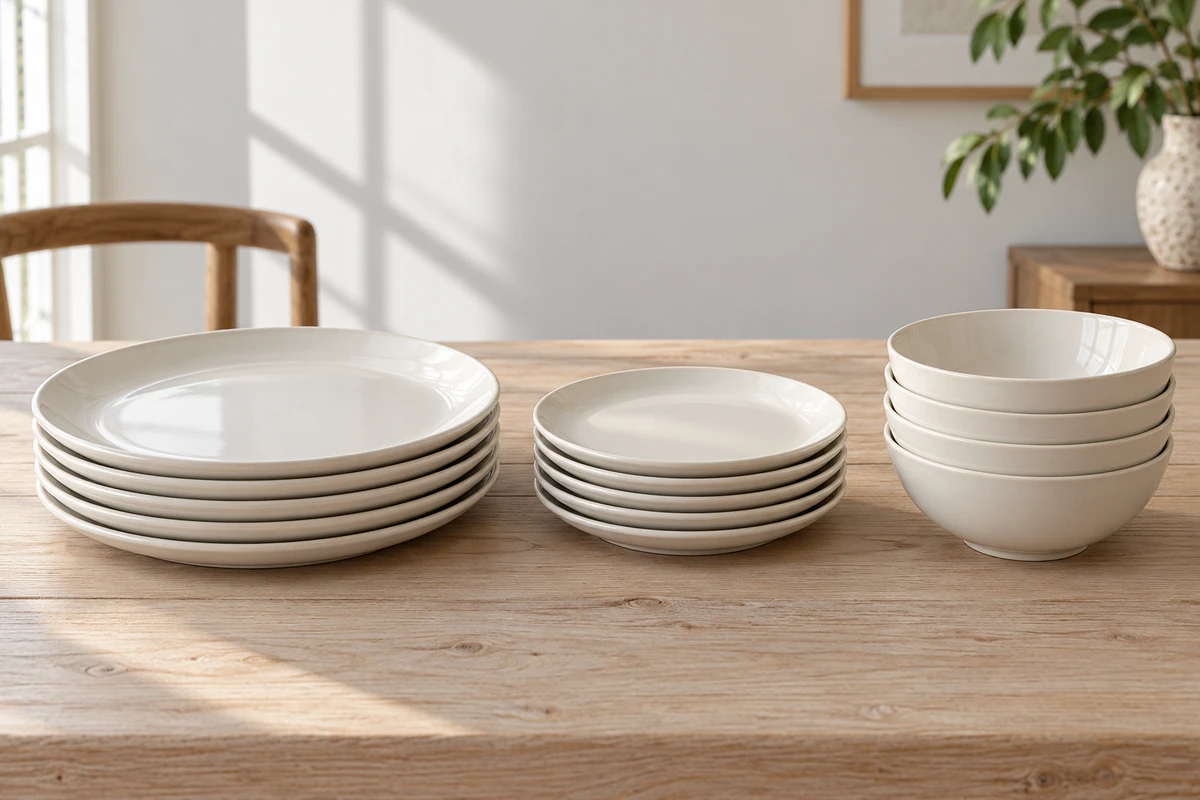
Buy dinnerware by the place settings and serving roles your project requires, then compare the supplier’s bundle against that schedule. A high piece count can contain unwanted side plates while leaving every requested mug unpriced. The buying question is a complete, usable assortment, not the largest carton total.
Specify quantities by role and exact form before asking whether a stock set, open-stock top-up or custom assortment can be offered. The route table separates availability from the arithmetic; no matching piece or future replacement supply is assumed.
Compare stock bundles, top-ups and a specified assortment
Return the same role schedule with every offer. Where a supplier substitutes a different bowl or mug, preserve the alternative reference rather than crediting it as the requested form automatically.
| Supply route | What to verify | Cost denominator to keep honest |
|---|---|---|
| Whole stock bundles | Written contents, exact forms and number of bundles actually available | Required complete settings, with surplus pieces still visible |
| Stock bundle plus individual top-ups | Matching references, minimums and actual separate availability | All pieces needed for the defined setting, not the bundle alone |
| Specified assortment | Supplier acceptance of quantities per form, packing and any custom minimums | Same required settings and stated extras |
| Revised meal brief | Owner’s approval of omitted or changed roles | New outcome described openly; do not call it the original complete setting |
For the fictional apartment comparison later in this guide, extra side plates do not close the mug shortfall. Equally, a matching-looking mug photo does not establish that it is separately orderable. Request a line for each missing form, its exact size and offer validity before concluding that the top-up route is cheaper.
Ask for the final assortment to be shown in both the quote and packing description. Product-use evidence, glaze/decoration identity and protective packing retain their own reviews. This article’s role counts are a procurement worksheet, not a food-contact approval or a universal definition of a dinner set.
Define a complete setting for this purchase
List the items one person needs for the intended service. An apartment breakfast provision might include a cereal bowl and a mug as well as a dinner plate for other meals. A retail dinner set may deliberately exclude drinkware. Neither arrangement should be assumed from the word complete.
Keep shared serving pieces in their own section. A large serving bowl used by the table is a different requirement from one bowl per person. Count spare or replacement pieces separately as well, using the buyer’s actual plan rather than an invented breakage allowance.
For a retail bundle, describe exactly what the customer will receive in one saleable setting or set. For an apartment order, describe the contents needed per apartment and the number of apartments. Those purchasing plans can call for the same ceramic forms in different combinations.
Read the contents list as carefully as the set name
IKEA’s FÄRGKLAR 806.006.11 provides a named example. Its official Belgium product page lists six plates, six side plates and six bowls, with separate dimensions for the types. That explains the 18 pieces in this particular offer; it is not a universal definition of an 18-piece set. IKEA FÄRGKLAR contents
Ask each supplier for the same role-by-role contents list. Identify mugs, cups, saucers and serving dishes as included, separately quoted or absent. If a photograph shows a full table, request the written inclusion list rather than counting every object in the scene as merchandise.
Do not accept one ambiguous “bowl” row when the meal plan distinguishes cereal, soup and shared serving. Ask which form is offered for each role. If one vessel is proposed for multiple roles, have the buyer assess that proposal explicitly instead of buying extra pieces automatically.
Match forms and dimensions to the meal role
For a plate, request the overall diameter or dimensions and the relevant shape or profile. If the usable central area matters, ask how the rim changes that space. A wide-rim plate and a flat plate with the same overall diameter need not answer the buyer’s presentation brief in the same way.
For a bowl, request the opening diameter, height and shape reference. If capacity matters to the intended portion, ask the supplier to define the quoted capacity and its measurement basis. Do not calculate a bowl’s usable capacity from a diameter alone. The buyer should decide whether the proposed form serves the intended meal.
Keep appearance requirements attached to these exact pieces. A matching colour name does not identify the plate size or bowl form. Request the proposed combination together when reviewing how a set looks and occupies the buyer’s table or storage space. That review remains separate from finished-product food-contact and use-claim assessment.
Build a meal-role assortment worksheet
Fill the quantities from the buyer’s plan, and add the actual supplier references and dimensions in the response columns. Use separate rows for pieces whose role or approval differs.
| Meal role | Requirement to state | Supplier answer to request | Assortment question |
|---|---|---|---|
| Dinner plate | Required number and relevant size/profile | Exact plate reference and dimensions | Is enough of this plate included? |
| Side plate | Required number, including zero if not needed | Set contents and selectable alternatives | Is this useful demand or unwanted surplus? |
| Cereal or soup bowl | Required number and intended serving role | Form, opening, height and defined capacity if needed | Does the offered bowl answer the role? |
| Mug or cup | Required number and chosen form | Included or separate reference | Is drinkware missing from the set? |
| Shared serving piece | Count per table or household | Separate dimensions and quote line | Has a shared piece been counted per person? |
| Planned spares | Buyer-approved quantities by piece | Individual purchase availability and terms | Can the stated spare plan actually be ordered? |
Add a column for each stock-set option and another for the exact assortment requested. Keep unanswered individual-piece availability visible. A supplier’s broad range photograph does not establish that it will sell the matching mug or replacement bowl separately.
A fictional apartment needing eight settings
Imagine an apartment purchase requiring eight dinner plates, eight cereal bowls and eight mugs. No side plates are requested. All quantities and offers in this example are fictional; no supplier price or availability is implied.
Stock set S contains six dinner plates, six side plates and six bowls. Assume only for the quantity comparison that the proposed dinner plate and bowl forms match the requirement. One S gives too few plates and bowls and no mugs. Two S sets give surplus pieces while still leaving all the mugs to buy.
| Piece | Required | One S set | Two S sets | What remains to resolve |
|---|---|---|---|---|
| Dinner plates | 8 | 6 | 12 | One set is short 2; two sets give 4 extra |
| Cereal bowls | 8 | 6 | 12 | One set is short 2; two sets give 4 extra |
| Mugs | 8 | 0 | 0 | 8 mugs still required either way |
| Side plates | 0 | 6 | 12 | No planned use stated |
Request three clearly described alternatives if the supplier can offer them: the exact eight/eight/eight assortment; one S plus two matching dinner plates, two matching bowls and eight mugs; or two S plus eight mugs. Ask for actual availability and quote terms for each route rather than assuming the pieces can be selected freely.
The total number of pieces should not decide the outcome. Twelve surplus side plates do not replace eight missing mugs. If the buyer finds a real use for extra plates or bowls, add that demand openly; otherwise leave the surplus visible instead of crediting it with an assumed resale or replacement value.
Ask about replacements before committing to a set architecture
A useful quotation answers whether the exact dinner plate, bowl and mug references can be purchased separately later, and under what current terms. Ask whether the offered series or finish may change and what identification should be retained for a repeat inquiry. The answer is a supplier statement about the present offer, not a guarantee of future stock.
If replacements matter to the operating plan, compare that evidence alongside the initial assortment. A buyer may prefer a simpler group of individually orderable forms, but only an actual supplier response can establish whether that route exists. Do not promise open-stock support merely because a product is called a series.
Request the assortment and review the product separately
Return a final schedule naming every included piece, its dimensions, role and quantity. Have the appropriate reviewer resolve product materials, destination evidence and requested use claims. Protective packing and transport are separate quote questions; a coherent meal setting does not establish that its pieces are compliant or will arrive intact.
The Kitchenware category provides broader context. Use the Homeware sourcing request to describe the desired meal setting and number required, then identify the stock set being compared. Product links, text or labelled image previews can make the missing pieces clear without treating the form as a spreadsheet-upload channel.
Before ordering the chosen assortment, use the kitchenware material-and-use brief and the ceramic sample and inspection evidence guide. Role counts decide the assortment; these separate checks address the actual products.
Frequently asked questions
How many people does an 18-piece dinnerware set serve?
Read its exact contents and define the setting you need. A bundle containing six of three selected forms provides six copies of that arrangement, but it may omit mugs or another required item. The total count alone cannot establish complete service for your meal plan.
Do dinnerware sets normally include mugs and serving bowls?
Do not assume inclusion. Ask the supplier to identify every item and count, then list drinkware and shared serving pieces separately. A styled table photograph may show items sold outside the quoted set. Only the specific offer’s contents should enter the quantity comparison.
How should I specify dinner-plate and bowl sizes?
Identify each meal role, then request the exact dimensions and form. Plate diameter may need a rim or profile reference; bowls may need opening diameter, height and a defined capacity where portion size matters. Keep those answers attached to the quoted piece rather than a general series name.
Is a custom plate-and-bowl mix better than complete sets?
Compare the actual offers against the required roles and quantities. A tailored mix may avoid unused side plates, but its availability and terms need confirmation. A stock set may still be appropriate if its contents have a real use. Do not rank alternatives on headline piece price before accounting for missing and surplus pieces.
Is an 18-piece set necessarily six complete settings for my project?
No. Read the actual contents and compare them with your required roles and forms. Some sets exclude drinkware or contain pieces your project does not need.
Can I assume a matching mug will be available separately?
No. Request the exact reference, minimum, quantity and current offer terms. A series photograph or a statement about future replacements does not reserve stock.
Sources
Discuss a sourcing request related to this article.Dinnerware Set RFQ: Buy the Place Settings You Need
Prepare a clearer buying request
Keep this page as context. Add what you know; review everything before sending. No purchase is made at this step.
Edit the checklist below before continuing. It stays a planning note; it does not approve a product or order.
- Meal role
- Requirement to state
- Supplier answer to request
- Assortment question