
Wall Shelf Handover: Resolve Readiness Before Loading
Separate delivered shelf components from the location-specific installation and intended-use answer the recipient needs before loading a wall shelf.
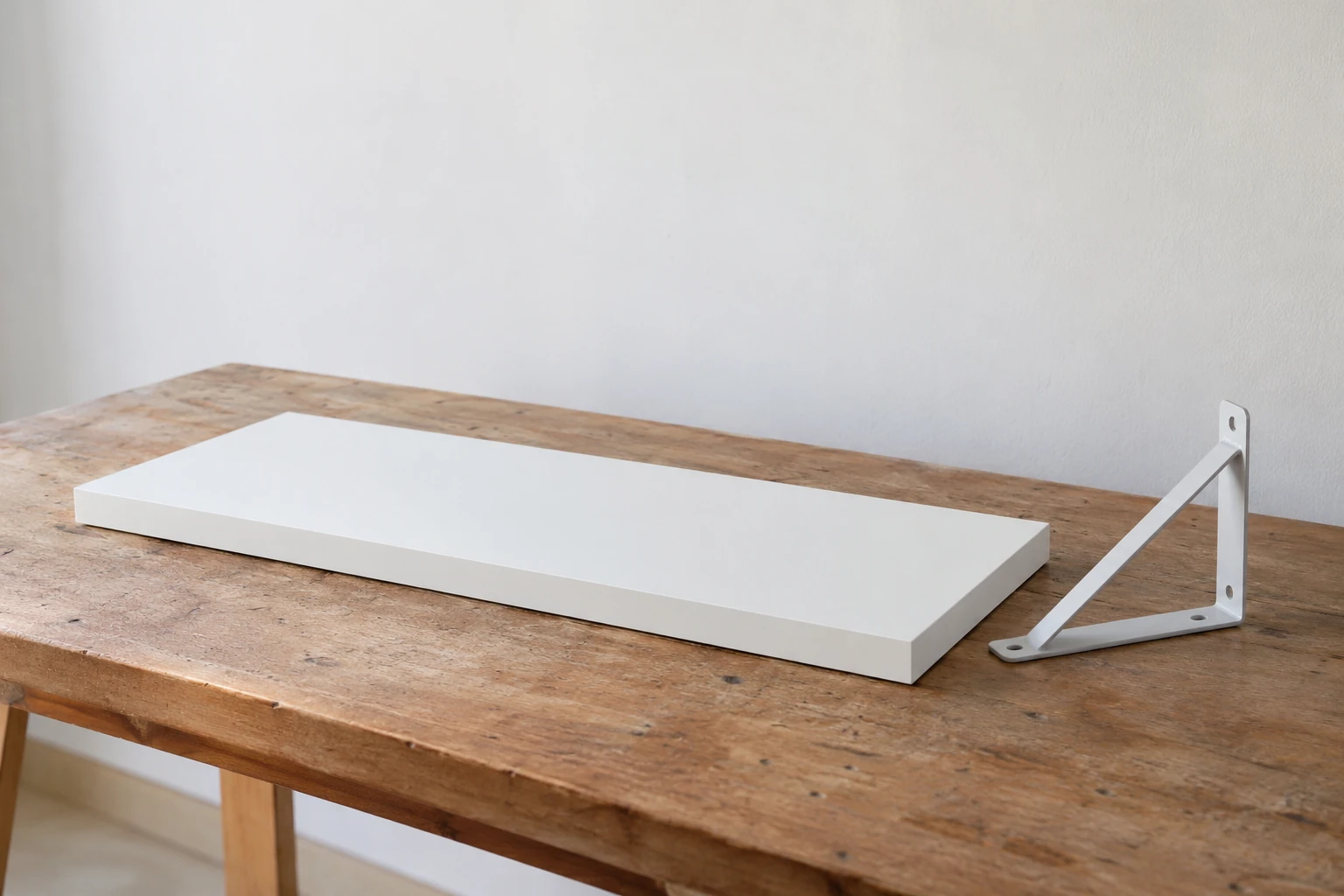
A delivered wall shelf can have its supplied bracket present while the decision about using it on a particular wall remains open. Before the room recipient puts anything on it, establish what the handover actually confirms: delivery, installation work, or readiness for the specified display use. Those answers need different evidence.
Start with the selected wall-supported shelf and intended location. This article helps the buyer ask the right readiness questions and communicate an unresolved condition. It does not select fixings, diagnose a wall, prescribe installation or determine a permissible load.
Ask what “complete” means for this shelf
Separate the shelf body and its product-specific suspension components from the wall-specific fixings. A supplied bracket is part of the product connection; the actual wall connection still needs the applicable design, instructions and responsible review. A receipt that calls both “hardware” can conceal that distinction.
IKEA’s LACK 902.821.80 page says its hidden suspension brackets are included and wall-mounting screws are sold separately. Its safety text requires secure anchoring with suitable screws and plugs and advises professional help when uncertain. These are statements about that named shelf, not a fixing recommendation for another product or wall. LACK product and anchoring information
For the buyer’s shelf, carry forward the exact product and bracket references. Ask which wall-related items are included, separately obtained or still unspecified. Avoid filling the last category with whatever spare hardware happens to be available. Completion of a contents check does not settle the intended wall installation.
Give the installer a location and an intended use to answer
Identify the actual wall location clearly enough that an answer cannot be confused with one for another room. Use the property owner’s or installer’s wall information where available; leave an unknown wall condition unknown. A decorative finish or a room photograph should not become a buyer’s structural diagnosis.
Describe the intended display in practical terms for the responsible reviewer. Ask whether that scope has been considered and what conditions remain. Do not copy a catalogue load figure into the handover as permission to place the proposed contents on a different installation.
The questions can be short: does the response cover this shelf and bracket on this wall? Has the applicable installation work been completed? Does the responsible person’s conclusion address the intended display use, or only delivery and assembly? Ask for the actual limits of that response rather than a general “all done.”
If a provider’s agreed task ends before wall-specific work, obtain the next responsible answer separately. An assembly invoice cannot establish an installation step outside the provider’s scope, even if the shelf now looks like the product photograph.
Distinguish a visible position from a confirmed usable installation
A shelf photographed on a wall may appear finished while essential questions remain undocumented. Keep the photograph as a location or appearance reference, with its actual context. Do not use it as proof of anchoring suitability, concealed fixing condition or loading permission.
Likewise, a response saying “bracket fitted” may describe only part of the work. Ask what was fitted to what, which product instructions applied and which unresolved conditions the responsible installer identified. The buyer needs an intelligible completion statement, not instructions to inspect hidden fixings personally.
While a necessary mounting or use condition remains unresolved, do not present the shelf to the recipient as ready to load. If it is already mounted and its status is uncertain, request advice from the responsible installer rather than suggesting a pull, shake or trial load. This article includes no physical test or corrective mounting method.
Use a shelf-specific readiness worksheet
Complete the product and location references first. The following original worksheet separates facts about supplied components from conclusions that require installation responsibility.
| Readiness question | Evidence to request for the exact shelf | Limited conclusion it can support |
|---|---|---|
| Are the intended shelf and bracket identified? | Product variant and matched suspension-component reference | Which wall-supported product this record concerns |
| What wall connection remains? | Actual included/excluded fixing scope and outstanding wall-specific decision | Whether a required item or decision is still missing |
| Which location was reviewed? | Named wall position and responsible source of wall information | The location to which the answer applies |
| What work was completed? | Applicable instruction reference and installer’s scoped completion response | Only the work that response actually covers |
| Was the intended display addressed? | Responsible answer for the specified use, including remaining conditions | Whether that use question is answered or still open |
| What should the recipient be told now? | Delivery-only status, unresolved mounting status, or the actual bounded completion conclusion | Accurate handover wording without an invented safety approval |
A missing answer should stay in its own row. A complete shelf-and-bracket identity can coexist with an unanswered wall question. Resolving the latter may require a different person from the supplier who correctly supplied the product.
Fictional decision: “hardware complete” at a room handover
Consider fictional shelf S4, supplied with suspension bracket B4 for a planned display at wall W. The receiver’s delivery note says “hardware complete.” The actual contents list confirms B4 but excludes wall-specific fixings. No wall assessment or installation response has been returned. All references and events in this example are invented.
The buyer revises the note to describe what is actually established: S4 and B4 have been delivered; wall-specific fixing and installation questions remain; the shelf is not being handed over as ready to load. That correction preserves the useful receipt information without presenting an unfinished installation as usable.
The next request goes to the appropriate installation provider with S4, B4, W, the applicable product instructions and the intended display description. It asks for acceptance of that scope and the unresolved prerequisites. It does not ask the supplier to recommend a universal anchor from a product photograph.
Suppose a later message says “installation finished,” but identifies wall V in another room. That answer cannot close W’s row. The buyer requests the correct location-specific response and keeps the recipient’s status unchanged until the actual question is answered.
Alternatively, the provider may report that it cannot complete the intended installation under the available conditions. The buyer can keep the shelf out of use and ask for an appropriately reviewed change of location or product. It would be misleading to rewrite the original display as approved merely to finish the room checklist.
If a competent responsible party later confirms the relevant work and addresses the specified use, the buyer can pass on that exact conclusion and its conditions. The handover does not expand it into a general load guarantee. No drilling, fixing selection, installation trial or structural verification occurs in this fictional example.
Make the recipient’s next action unambiguous
Use a plain status sentence beside the shelf reference. For an unresolved item, say which wall or use question is outstanding and that it is not ready for loading. For completed work, identify the actual scoped confirmation and preserve any relevant use conditions. Do not substitute a buyer-created “safe” badge for that information.
Return to the responsible reviewer if the shelf is moved, the bracket is changed or the intended display materially changes. The earlier conclusion belongs to its stated product, location and use. It should not travel automatically with the shelf’s colour or model name.
The Homeware baskets and storage category provides broader context. A Homeware sourcing enquiry can describe the selected product and unresolved supplied-component question. Confirm any installation or technical-review service separately; the sourcing enquiry does not provide engineering sign-off or a ready-to-load decision.
Frequently asked questions
Is a delivered wall shelf with its bracket ready to load?
Component delivery establishes only the supplied product scope. The actual wall connection, applicable installation work and intended display use need the responsible location-specific answer. Keep the recipient informed when that answer is missing, and do not use a catalogue load figure or the presence of a bracket as a substitute.
What should a shelf handover say while wall fixings are unresolved?
Identify the shelf, supplied bracket and intended wall, then state which wall-specific decision or work remains and that the shelf is not being handed over as ready to load. Ask the appropriate installation provider for the missing scoped answer. The handover itself should not choose an anchor or prescribe a mounting method.
Does a photograph of the shelf on the wall confirm installation readiness?
A photograph can identify a location or appearance, but it cannot establish concealed fixing suitability or the scope of completed work. Ask the responsible installer what the actual confirmation covers. Do not suggest pulling, shaking or trial-loading the shelf to fill the evidence gap.
Can an installation response for another room cover an identical shelf?
Keep the response with the location and use it actually addresses. Even the same shelf model does not make two wall conditions identical. Obtain the intended wall-specific answer and preserve any remaining conditions. If the use or location later changes, return that change to the responsible reviewer before extending the earlier conclusion.
Sources
Discuss a sourcing request related to this article.Wall Shelf Handover: Resolve Readiness Before Loading