
Reorder Pillowcases in Confirmed Pieces, Pairs and Packs
Start from an approved pillowcase reference, then buy the missing cases in actual pack units while deciding whether a targeted appearance top-up is acceptable.
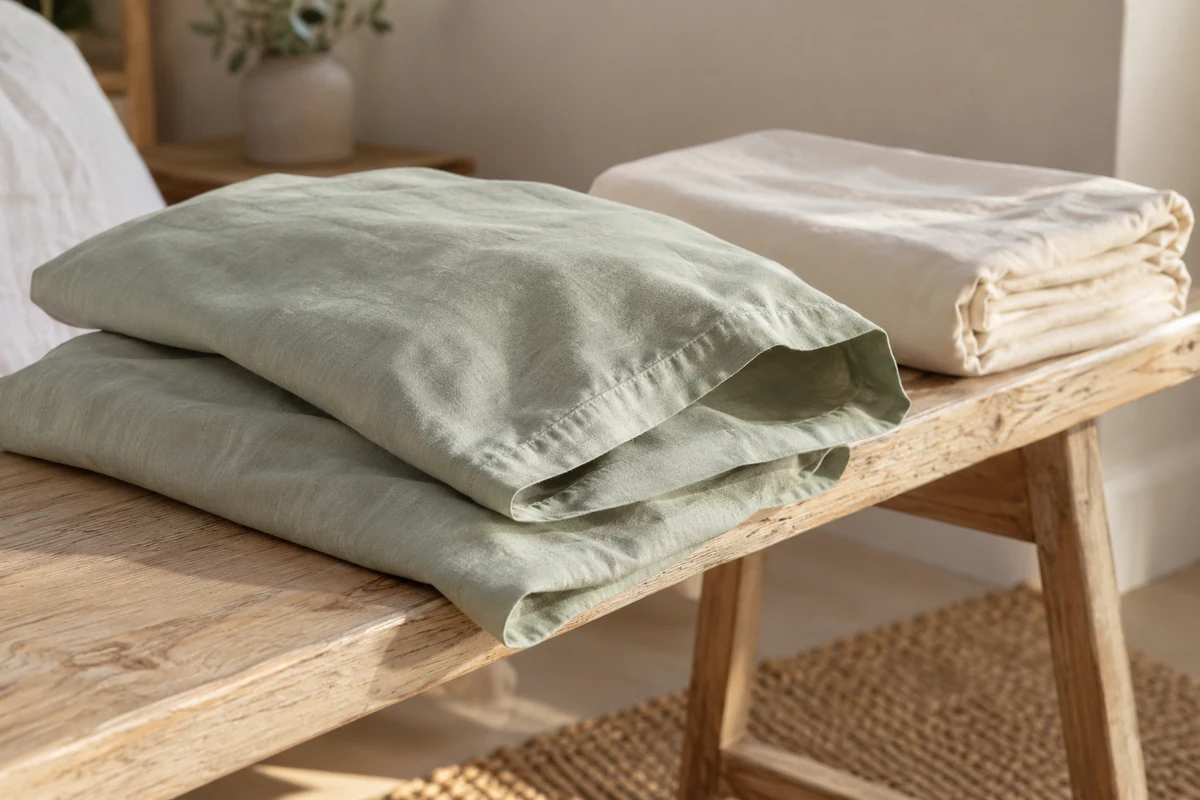
When the sheets and duvet covers remain adequate, a shortage of sleeping pillowcases does not automatically require another whole bedding set. Start from the pillowcase reference whose size and opening are already approved, then determine how the current seller packages that exact case. Five missing cases are five pieces of demand, even when the offer is sold in pairs.
Pillowcase-only repeat packs address that later replenishment choice. This article does not choose a new pillow size, specify a duvet set or reopen the original fit worksheet. It compares standalone case supply with the extra bedding created by repeating a full set, while keeping appearance differences explicit.
Begin after case fit and opening are established
Identify the existing approved case reference and the retained pillows it serves. Carry that identity into the repeat inquiry without rebuilding a dimensional specification from a generic bed name. If the current offer changes the size, opening or construction, it is a new candidate requiring its own review rather than an unchanged repeat.
Count the cases actually missing from the chosen household provision. Keep a temporary absence from the laundry separate from a permanent shortage and any deliberate extra allowance. The owner may choose more rotation stock, but that is additional planned demand, not proof that every unavailable case needs replacement.
Record whether sheets, duvet covers and filled pillows are outside this purchase. That boundary makes a case-only request intelligible and stops the current gap from expanding into a bedding refresh merely because a seller prefers sets.
Resolve the purchase unit before multiplying it
IKEA’s US DVALA Queen pillowcase 203.572.54 is a standalone listing with 20 by 30 inch measurements. Its displayed fields use both “Pillowcase quantity 1 pack” and “Package quantity 2 pack.” The pack labels need to remain explicit; they are not a reason to guess how another seller uses piece, pair or pack. DVALA pillowcase measurements and quantity fields
For the actual offer, ask a simple contents question: how many individual pillowcases of the selected reference are delivered when the order quantity is one? Preserve the seller’s answer beside the selling-unit name. “One pair containing two cases” is interpretable; “two packs” without their contents is not.
Keep any outer carton grouping separate. A carton of twelve confirmed two-case packs represents twenty-four cases, but only when both levels are actually established. A number appearing beside a product image might refer to a selected quantity, a multipack or a packaging field. Do not choose whichever interpretation gives the lowest apparent unit price.
Decide whether a targeted appearance top-up works
An approved functional reference does not guarantee that new cases will look identical beside retained bedding. Ask what the current variant and finish description establish, and let the owner decide whether the proposed appearance is acceptable for the intended arrangement. Do not promise batch colour, texture or feel continuity.
Separate two questions: can the existing bedding remain, and does the owner require a coordinated appearance within a particular group? A household may accept separately paired replacement cases while keeping all sheets. Another buyer may require the cases in a visible pair to match one another. Neither choice automatically demands new duvet covers.
If a new appearance group is proposed, show how many cases that choice requires and why. Do not silently increase five missing cases to twelve because a full set photograph looks more coordinated. An appearance-driven refresh is a deliberate changed requirement, with retained pieces and extras accounted for openly.
Compare case-only supply against set-created extras
Ask whether the approved case is currently offered individually or in a confirmed multipack. Obtain the real selling increment and any relevant order conditions. A standalone manufacturer example establishes that such a commercial format exists; it does not prove that the buyer’s particular supplier offers it.
If the seller returns only complete bedding sets, list the actual contents of those sets. Count the pillowcases that answer this shortage and the additional sheets or covers that the current plan does not need. Keep them as extra purchased items unless the owner identifies a genuine separate use.
Compare the complete actual offers for supplying the chosen case requirement. A set may have a favourable price, but that alone does not make its extra bedding disappear. Avoid invented resale credit, assumed savings or unverified minimum quantities. An unavailable case-only option is an inquiry result, not an imaginary low-cost competitor.
Use a repeat-pack worksheet rather than another fit sheet
| Worksheet field | Record for the case-only decision |
|---|---|
| Existing approved case | Exact retained reference and unchanged size/opening basis |
| Cases actually missing | Individual-case count, separate from temporary laundry absence |
| Piece, pair or pack unit | Seller’s name for one order unit and confirmed cases inside |
| Actual package contents | Exact case variant, inner count and any outer grouping |
| Required purchase units | Confirmed units needed to cover the selected shortage |
| Case remainder | Extra cases created by the actual pack increment |
| Whole-set extras | Sheets, covers or other bedding bought only through a set alternative |
| Appearance decision | Accepted targeted top-up or a separately chosen refresh scope |
The worksheet deliberately starts with a settled case reference. Missing fit approval should return to the product-selection question rather than being hidden inside the pack arithmetic.
Fictional example: five missing cases, three two-case packs
Imagine a household needs five cases of an already approved reference. Its sheets and duvet covers remain adequate. For this example only, the seller confirms two individual cases per standalone pack and the owner accepts the proposed appearance beside the retained bedding. All quantities and decisions are fictional.
Two packs supply four cases and leave one missing. Three packs supply six cases, covering the five-case requirement and leaving one extra. Record that extra case as a pack remainder, not as evidence that six cases were originally missing.
Suppose a fictional full-set alternative contains one duvet cover and two of the same approved cases. Three sets also supply six cases but add three duvet covers. The set route therefore creates one extra case plus three covers outside the current requirement. No prices or availability advantage are assumed.
The buyer asks for actual current totals for three case-only packs and three complete sets, then considers the extra goods. It must not divide the set total by all nine textile pieces and call that the cost per required pillowcase. The five-case shortage is the purpose of the comparison; the sixth case and three covers have distinct consequences.
If the owner rejects the new case appearance beside the old group, the case-only option is not yet selected, even though its count works. The next decision is whether another approved appearance option exists or whether the owner deliberately wants a broader case refresh. That change can remain limited to cases; it does not require replacing all bedding by default.
Send an inquiry that keeps the narrow need visible
A useful inquiry names the established case, requests the missing individual count, asks what one order unit contains and states which bedding is excluded. Include the owner’s actual appearance requirement without asking the seller to guarantee an unverified match to aged or unidentified textiles.
See Homeware textiles for broader context. Use the Homeware sourcing enquiry for a supported marketplace link, concise description or permitted images. The form is not a spreadsheet or technical-document upload channel; agree any longer reference exchange and actual review scope separately.
Frequently asked questions
How many two-case packs cover five missing pillowcases?
If the seller confirms two individual cases per pack, three packs supply six cases and leave one extra. Two packs supply only four. This arithmetic assumes the exact case reference and appearance are already acceptable; it does not establish fit or resolve an ambiguous pack label.
What should I ask when a pillowcase page mixes piece, pair and pack?
Ask how many individual cases of the selected reference arrive when the order quantity is one. Keep the answer beside the seller’s unit label and clarify any outer carton separately. Do not silently reconcile contradictory fields or transfer another retailer’s packaging convention to the offer.
Do I need another duvet set if only pillowcases are missing?
First request the established case as standalone supply in its actual selling units. If only full sets are offered, list their extra covers, sheets or other contents and compare complete actual offers. A case shortage does not create an automatic need for those other textiles.
Can replacement cases be assumed to match the retained bedding’s colour and feel?
No. Ask for the current variant and have the owner decide whether its appearance is acceptable for the intended grouping. Keep any broader case refresh explicit. A matching reference or colour name should not become a guarantee of batch colour, texture, feel or performance continuity.
Sources
Discuss a sourcing request related to this article.Reorder Pillowcases in Confirmed Pieces, Pairs and Packs