
Glass storage jars from 1688: verify use claims before buying
Compare jar bodies, lids and seals with a practical claim matrix for capacity, cleaning, fit and intended use before a wholesale order.
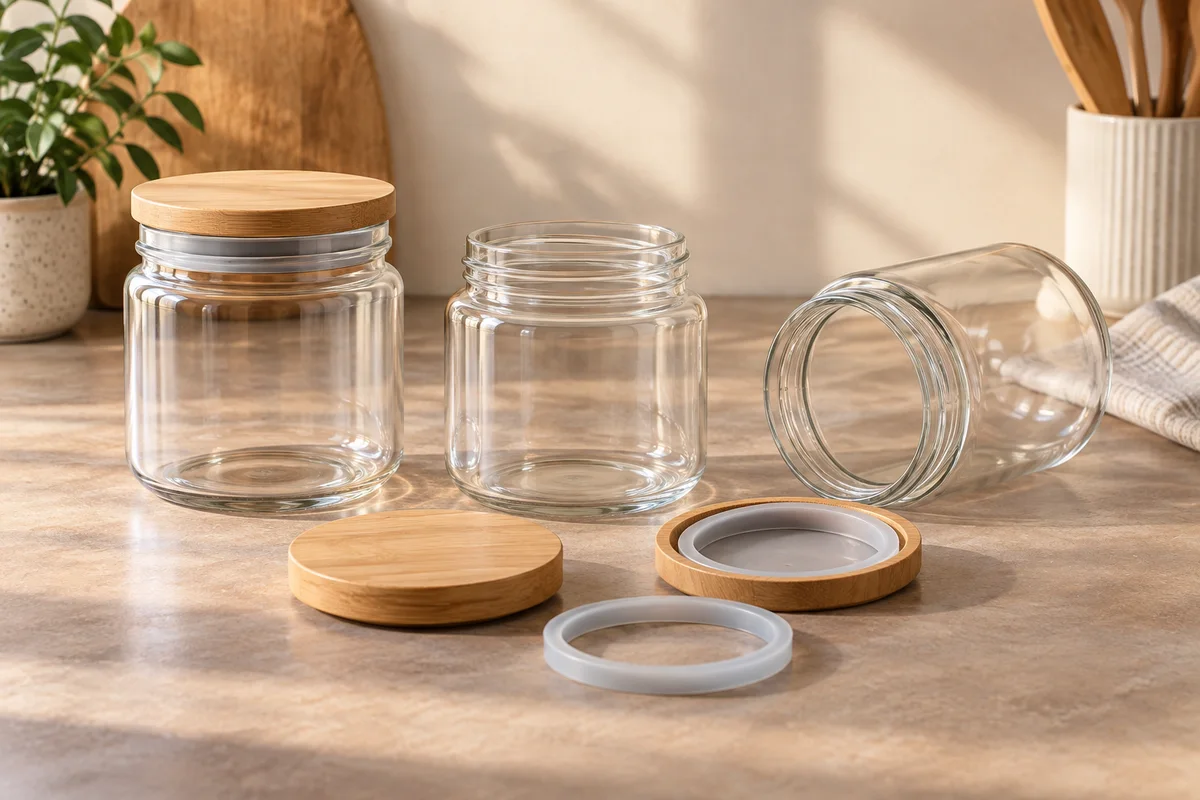
Approve a wholesale storage jar as an identified body, lid and seal combination, with each requested use claim linked to its evidence. A photograph of a tight-looking lid does not establish airtightness, liquid leakage performance or permission to heat the jar.
Before comparing suppliers, distinguish the required pantry job from optional claims. Use the change-response table below with the existing claim matrix so a substituted lid, gasket or label cannot silently inherit the first sample’s approval.
Reopen only the claims affected, but do not hide the change
The appropriate product reviewer must determine the actual evidence needed. This original table helps the purchasing team route the question; it is not a test protocol or approval rule.
| Change proposed | Information to request | Approval question to reopen |
|---|---|---|
| New lid or seal reference | Material, geometry, compatibility and current care statement | Which fit, closure and use claims concern the changed assembly? |
| New decoration or label | Exact finished configuration and proposed wording | Which evidence covers the decorated item and its stated use? |
| New size in the family | Body, opening, working-capacity definition and matching components | Which earlier findings apply, and which require their own review? |
| New retail parcel | Actual packed configuration and delivery scope | Does any previous protective assessment cover this route? |
| Broad claim removed from copy | Remaining required product function and exact revised wording | Does the offered product still satisfy the buying brief? |
Keep the previous approved configuration in the record. If the new lid has not been assessed, show the old combination as historical and the new one as pending; do not overwrite one reference with the other. Likewise, removing “leakproof” from a label does not resolve a brief that actually requires liquid transport.
Ask the quotation to repeat the agreed assembly references and the evidence still to be delivered. A useful reply says which claim remains unanswered and who is responsible for resolving it. It does not borrow another model’s care statement as approval for this SKU.
Start with what the customer will put inside
Specify the intended contents, storage conditions, destination and sales channel. Dry pantry storage calls for a different brief from a lunch container, a hot-fill preserve jar or a vessel for microwave reheating. Give the required use specifics and leave optional claims out until you have supporting evidence.
For each size, list the product code, shape, external dimensions, opening dimensions, body material, lid material, gasket material and decoration. Ask whether the gasket is removable and whether replacement lids and seals are available. A photo does not prove that the next batch will use the same components.
Get the current care instructions with the quote. Do not wait until packaging is printed to find out which parts require hand washing.
Separate the body, lid and seal in the claim matrix
List each claim in its own row and make a clear decision: approved, pending or removed. Include the component, claim conditions, supporting document, sample reference and reviewer. Unanswered rows remain pending.
| Claim to discuss | Evidence or definition to request |
|---|---|
| Capacity | Brimful or intended working capacity; measurement method and tolerance |
| Lid fit | Exact compatible jar and lid revisions; closing method and fit criteria |
| Airtight | Meaning of the claim, conditions and relevant test evidence |
| Leakproof | Orientation, contents, duration and test method for the complete assembly |
| Dishwasher use | Which components, applicable cycle conditions and evidence |
| Hot fill, freezer or heating | Explicit permitted use, limits and evidence for this model |
| Food contact | Finished-item materials, intended contents and destination review |
Airtight and leakproof are separate promises. If the supplier cannot define one, do not treat a convincing-looking lid as the answer. The kitchenware sourcing guide explains broader material-and-use document checks.
Learn from a real manufacturer’s product distinctions
Anchor Hocking’s care page distinguishes its pantry jars from its bakeware and food-storage dishes. Its pantry-jar instructions exclude freezer, oven and microwave use, and cleaning instructions vary by lid and finish. These are instructions for the named manufacturer’s products, not for a jar on 1688. See Anchor Hocking’s care and use page.
The procurement lesson is to request equally specific instructions for your chosen jar. Even one brand’s care rules can differ across items. Its dishwasher FAQ directs customers to each product’s care statement; copying a broad glassware claim into every SKU would lose that distinction.
Check capacity and compatibility on a labelled sample
Ask for a production-intent jar, lid and seal as one labelled sample. Mark all component revisions on the sample record. Check the opening and closing process, fit, visible edge condition, presentation and removal of the gasket where intended. Record the actual observations rather than writing “good quality.”
Agree on how to measure and report capacity. Brimful capacity does not automatically show how much a customer can use while leaving the specified space under the lid. State whether the advertised figure describes the body alone or the working capacity of the closed assembly.
If the jars are sold as a size family, verify which lids interchange and which do not. Get a compatibility table, then check the claimed combinations. Separate different-sized lids during receiving so a correct lid is not accidentally packed with the wrong jar.
An appearance or fit check does not prove chemical safety, thermal performance or pressure resistance. Ask the appropriate specialist to define those assessments. Do not devise your own temperature-shock experiments to support heating claims.
Make inspection and packaging describe the same item
Establish repeatable acceptance criteria for body dimensions, lid fit, scratches, chips, decoration and completeness. Agree the sample scope, method and response to a failed check with the inspection party. Do not fabricate a universal tolerance or defect percentage across all jars.
Inspect the production-intent finished item, including any applied label or decoration and its seal. Keep unsuitable pieces out of the accepted count. Request carton layouts that separate glass contact points and protect lids and accessories. Use actual external carton measurements in the homeware shipping comparison.
If you will later ship jars individually to consumers, add that packing stage to the brief. Protection for the inbound master carton does not establish protection for a different outbound parcel.
Keep later changes from inheriting the first approval
Specify the changes that need review: glass design, surface decoration, lid supplier, gasket material, closure geometry, care label or packaging. Have the seller alert you before making them and explain which documents or sample approvals might be affected.
Keep a retained sample and the approved claim matrix with the purchase record. Verify replacement-part quantities, reorder specifications and remedy terms. A similar-looking replacement lid should still match the approved fit and intended use.
Copy this jar RFQ
Please quote [quantity by size] glass pantry jars for [contents], [destination] and [receiving date]. Identify jar, lid and seal materials and revisions. Define capacity and tolerance, supply component-specific care instructions, and attach evidence for each requested use claim. Quote samples, checks, protective packing, replacement parts and freight separately. Confirm that production changes require our review before dispatch.
Submit through the homeware sourcing page. Compare the completed claim matrices before choosing a supplier; the most useful response is the one that makes the promised use verifiable.
Put this guide to work
Working notes to adapt to your order. Keep the approved specification and the cited guidance alongside this sheet.
Use this reconciliation sheet when supplier replies must become a product listing, care label or replacement-part instruction. It keeps the wording attached to the approved jar, lid and seal combination rather than to a broad description of glassware.
Before transferring a use claim into sales wording
| Check | Record to keep | If unresolved |
|---|---|---|
| Attach the proposed wording to the intended contents and complete component combination. | The use brief, jar code, lid and seal revisions, and labelled sample reference. | Keep the wording pending until the supplier identifies the combination and intended use it describes. |
| Make each claim's conditions visible to the person preparing the label or listing. | The supporting document reference, relevant component-specific care statement and the recorded review decision. | Do not replace an unanswered condition with a broad promise; send the question back to its review owner. |
| Keep fit observations separate from specialist assessments. | The sample-fit record and a separate reference for any requested food-contact, heating or other specialist review. | Leave the affected use claim unresolved; appearance or a fitting lid cannot close the missing assessment. |
| Recheck wording when components or care instructions change. | The supplier's change notice, affected batch or replacement reference and the previous claim decision. | Ask which approval is affected before carrying the old wording into the changed product. |
Claim-to-label reconciliation record
Create a record for each proposed claim. Keep pending or removed claims visible in the working file so they are not accidentally copied into customer-facing wording.
| Field | What to enter | Decision or handover |
|---|---|---|
| Wording and intended use | [Proposed claim] · [Listing or label location] · [Contents and storage conditions] · [Destination] | What exact customer use would this wording promise? |
| Component combination | [Jar code and revision] · [Lid revision] · [Seal material and revision] · [Sample reference] | Does the evidence describe this complete combination? |
| Evidence and wording decision | [Document and care-statement references] · [Claim conditions] · [Review owner] · [Approved, pending or removed] | Which wording and conditions may be carried forward from the recorded review? |
| Batch or replacement change | [Affected batch or replacement part] · [Supplier change notice] · [Fit or care difference] · [Reassessment reference] | Does the changed item need another fit check or claim review before the wording is reused? |
Copy a pending-claim clarification request
We are reviewing [proposed claim] for [listing or label] on [jar code], [lid revision] and [seal revision], intended for [contents and conditions] in [destination]. Please identify the supporting document and component-specific care statement, and explain any limits that belong with the wording. The sample record [reference] covers [observations] only. Keep [unanswered conditions] pending for [review owner]. If [component or care instruction] has changed, identify the affected batch or replacement and which previous claim decision needs review.
Frequently asked questions
If a supplier removes a claim from the label, is the product issue resolved?
Only if the remaining offered function still meets the agreed brief and the relevant owner approves the change. Deleting a promise is not evidence that the original required use is satisfied.
Can a new lid inherit the old jar’s approval?
Identify the new assembly and ask the appropriate reviewer which fit, care and use-claim evidence is affected. Preserve the previous reference and record the new decision separately.
Sources
Discuss a sourcing request related to this article.Glass storage jars from 1688: verify use claims before buying
Prepare a clearer buying request
Keep this page as context. Add what you know; review everything before sending. No purchase is made at this step.
Edit the checklist below before continuing. It stays a planning note; it does not approve a product or order.
- Capacity
- Lid fit
- Airtight
- Leakproof
- Dishwasher use