
Replenish Bin Liners by Code and Confirmed Bag Count
Keep different household bin codes separate, expand each liner offer into actual bags and use observed demand rather than a subscription’s default cadence.
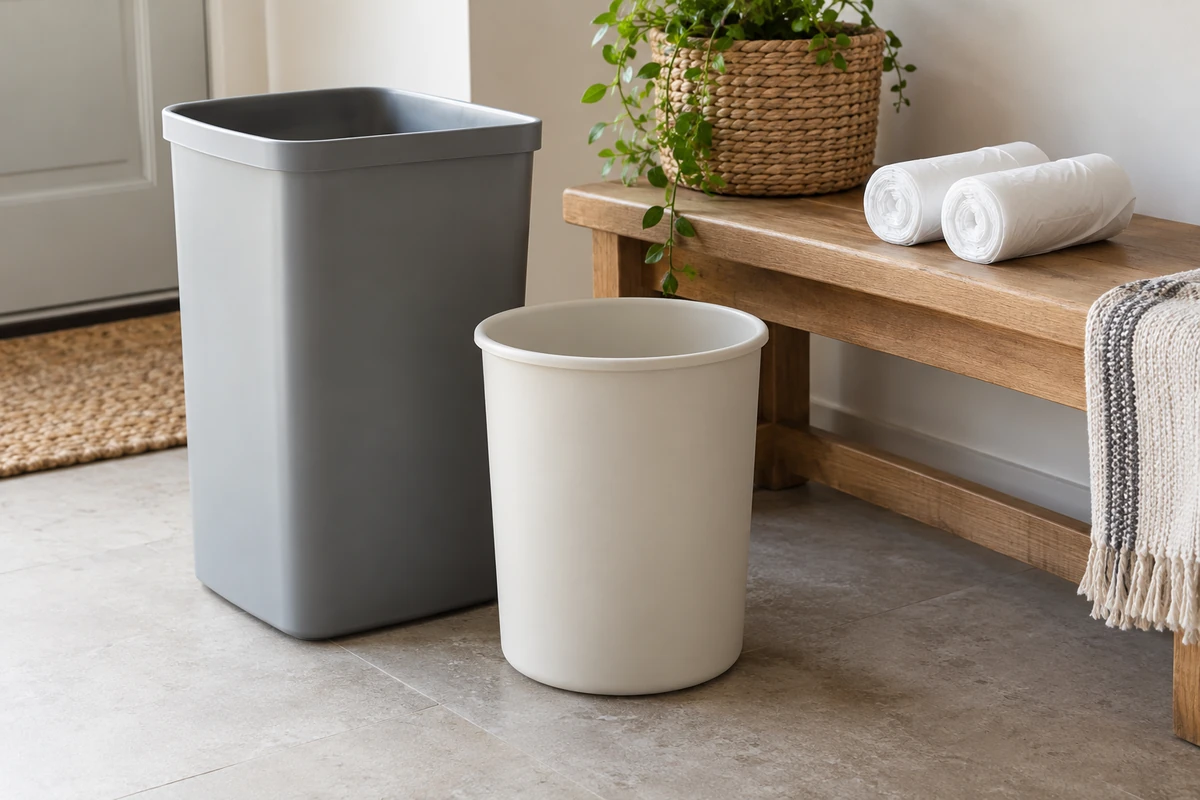
Replenish liners for the actual bins in the household, not for an undifferentiated category called kitchen rubbish bags. Two bins can serve the same room while requiring different manufacturer-matched liner references. A large offer for one code does not cover the second group merely because both bins have similar capacity labels.
Replenishing bin liners is a code-and-count decision. Identify which bags belong to which retained bins, establish how many individual bags the selected purchase unit supplies, and then compare that supply with the buyer’s own requirement. The worksheet does not predict consumption, promise bag performance or authorize an automatic repeat purchase.
Group the retained bins by an established liner reference
Record each actual bin model and the liner code or other exact reference supported for it. Where several bins share the same established match, they can form one purchasing group. Where the match is different or unanswered, retain a separate row even if all the bins are used for kitchen waste.
Simplehuman’s manufacturer code finder directs buyers to the liner ID tag under its trash-can lid. This is a manufacturer-specific identification aid, not a rule that every bin uses such a tag. Use existing records or an ordinarily accessible reference; do not dismantle, energize or reach into an uncertain bin to complete the sheet. Simplehuman code finder
For an unlabelled or different-brand bin, request a model-specific liner answer from the appropriate source. A capacity description can remain useful product information, but it is not a substitute for the established match. Do not assign a familiar code to an unidentified bin simply because a nearby bin uses it.
Read capacity and code as different fields
Simplehuman’s Code J white-liner page identifies Code J, lists a capacity range of 30–45 litres and offers named 100-pack and 200-pack quantity options. Those are fields for that specific product; they do not approve the bags for every bin within that capacity range. Code J liner specifications and quantity options
The code identifies the manufacturer’s offered liner family, while the quantity tells the buyer how much supply is being considered. Keep both in the request. If a supplier returns a 200-bag quote for a different code, the higher count does not answer a 100-bag requirement for the original one.
Use the seller’s exact contents statement to interpret packs, rolls, bags or cartons. Ask how many individual bags one purchase unit contains and whether an outer grouping includes smaller packs. Do not multiply an inner count again if the headline already gives the total number of bags.
Build demand from the buyer’s actual use
Choose the period or purpose the top-up is intended to cover and record the buyer’s known requirement by code. If observed use is available, state the observation period and which bin group it concerns. If it is unavailable, request it or keep the planned quantity as an explicit owner choice.
A website’s suggested refill cadence is a commercial option, not evidence that this household consumes that number of bags in that time. Different bin groups may have different usage patterns. Do not copy one subscription interval across every code or describe a selected pack as a guaranteed number of months of coverage.
Count existing bags only where their reference and availability for the chosen group are established. This narrow check prevents buying another large pack while a matching unopened supply is already assigned to the same need. It does not require a generic warehouse-state system or permit uncertain bags to be relabelled.
Keep optional spare quantities explicit. The owner can choose an additional allowance, but it should appear beside the current need rather than being presented as a measured consumption rate. No universal replacement interval or hygiene rule is supplied here.
Compare purchase units without merging codes
For each exact liner, expand the confirmed offer into individual bags. Then show the number assigned to the stated requirement and any remainder. If a pack leaves a surplus, identify whether the owner accepts keeping that supply under the actual product instructions and available storage conditions.
Do not offset an uncovered code with surplus bags of another code. If a substitute is proposed, obtain the appropriate pairing answer and the buyer’s decision before changing the requirement. A full cupboard is not evidence that every retained bin is covered.
Compare actual current totals for offers with the same intended scope. Include confirmed delivery or other required commercial amounts when relevant, but leave unanswered amounts open. Avoid claims that a larger pack is always cheaper or that a subscription always improves the purchase.
Use a code-specific liner worksheet
| Worksheet entry | What the buyer should record | Question it answers |
|---|---|---|
| Actual bin and liner code | Model, established liner reference and source | Which bin group does this offer cover? |
| Required bags | Stated quantity and planning purpose | What demand is being replenished? |
| Existing matching supply | Identified bags available for this same need | What remains to buy? |
| Bags per purchase unit | Seller-confirmed total and any inner grouping | What does one pack or carton actually contain? |
| Code-specific packs | Units proposed for this exact reference | How many matching bags are purchased? |
| Other bins not covered | Different codes and unknown pairings | What remains outside the offer? |
| Usage basis and remainder | Observation, explicit assumption and extra bags | What has been assumed about future consumption? |
This original worksheet supports a purchasing choice, not a tear-resistance, leak-resistance or odour-control claim. Those properties must not be borrowed from a named brand’s marketing for unknown goods.
Fictional example: one large offer, two bin groups
Imagine two approved household bin groups using fictional liner references A and B. The buyer chooses a top-up of 70 A bags and 30 B bags for a stated planning purpose. Assume there is no matching supply available for that purpose. These quantities, references and offer contents are invented.
Offer One supplies a confirmed 100-bag unit of A. It covers the 70 A requirement and leaves 30 A bags extra. It supplies none of B. Adding the two demand rows into “100 kitchen bags” would hide the uncovered 30 B bags.
The buyer requests a separate B offer. Suppose the fictional response confirms 40 B bags per purchase unit. One unit covers 30 B and leaves 10 B extra. The combined candidate purchase is 100 A plus 40 B, with remainders kept separate. No compatibility across A and B is assumed.
If the seller’s B reply merely says “one pack,” the arithmetic must stop at the missing bag count. The buyer can still retain the complete A proposal while asking for B’s exact contents. It should not invent a common pack size from the A listing.
Nor can a suggested two-month subscription settle whether either remainder is sensible. The owner needs its actual usage basis and chosen commitment. The worked decision is to split the replenishment by code, confirm contents and consciously accept or revise each quantity, without promising how long it will last.
Send the code and the unit together
See Homeware baskets and storage for category context. Through the Homeware sourcing enquiry, identify each actual bin/liner pairing and the individual bag count requested. Supported marketplace links, concise text or permitted images can make the references clear. Confirm the provider’s actual scope; the form does not establish automatic replenishment, compatibility or a standing purchase commitment.
Frequently asked questions
Can one liner capacity cover all my kitchen bins?
A shared capacity or room description does not establish a shared liner match. Group the actual bins by their supported code or exact liner reference, leaving unknown pairings separate. The Code J capacity range is a field for that named item, not approval for every similarly sized bin.
How do I compare liner packs, rolls and bag quantities?
Ask for the total individual bags in one selected purchase unit and any inner-pack breakdown. Use that total once when calculating coverage. A headline total should not be multiplied again by an inner count, and an unexplained “one pack” cannot establish how many bags the order supplies.
Does the recommended subscription interval show how often I should reorder?
No. It is a purchasing option rather than evidence of this household’s consumption. Use observed demand for the actual bin group or state an explicit owner-chosen quantity. Keep any recurring commitment separate from the quantity calculation and avoid promising a fixed number of months of coverage.
Can surplus bags of one code offset a shortage of another?
Only a separately established product match and buyer decision could change which bags serve the second group. Without that answer, keep both codes distinct. In the fictional example, 30 extra A bags leave the 30-bag B requirement completely uncovered.
Sources
Discuss a sourcing request related to this article.Replenish Bin Liners by Code and Confirmed Bag Count