
Stoneware Handover: Keep Oven Use Separate from Direct Heat
Check the actual heat source in a proposed serving routine before turning an oven-use statement into permission to warm stoneware on a hob.
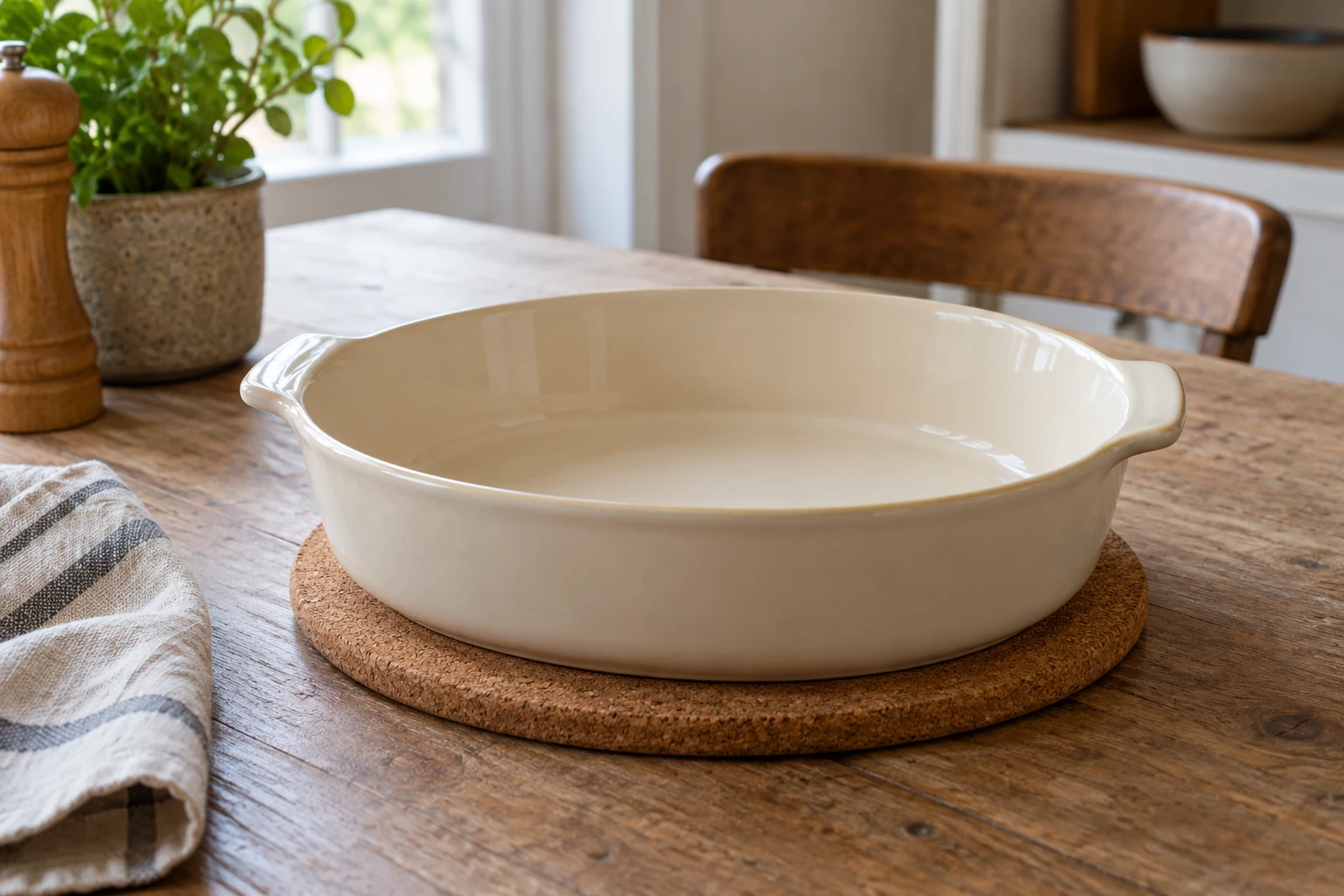
An oven-use statement does not settle whether a stoneware dish may go on a hob. Before handing over a serving routine, identify every proposed heat source and compare it with the instructions for the exact dish. Remove a conflicting direct-heat step from the plan rather than describing it as an ordinary extension of oven use.
The distinction between oven use and direct heat matters when a buyer likes the selected stoneware dish but the recipient expects to warm it in a different way. The decision is whether to change the planned routine, obtain a supported alternative product, or leave the intended task unresolved. It can be made without a cooking demonstration.
Follow the dish through the proposed kitchen task
Ask the recipient to describe where the dish is expected to go. “Oven to table” may be the intended plan, but an extra step such as keeping it on a hob while other dishes are prepared introduces another heat-source question. Write that step down even if it sounds brief or convenient.
Record the exact stoneware article and any supplied lid or accessory relevant to the task. Keep the manufacturer and model reference with the actual instructions. A product described only as a ceramic serving dish may not yet have a supported heating role at all.
For each proposed stage, name the actual appliance or heat source. “Warm the dish” describes an outcome, not the equipment or conditions used to obtain it. If the recipient names a warming appliance that the product documents do not address clearly, ask the responsible product and appliance reviewers to resolve that combination. Do not decide its suitability from the appliance’s marketing name.
The handover is easier to correct while it is still a written plan. There is no need to place the dish on a switched-off hob for a photograph, perform a low-setting trial or show that it fits the appliance. Physical placement does not establish permission for the later heated step.
Preserve both the permitted use and the exclusion
Le Creuset’s Ceramic Stoneware guidance includes oven use while expressly excluding stovetop and other direct heat sources for its stoneware. The two statements coexist for that named range. They do not establish the permitted uses of an unrelated ceramic article. Le Creuset care and use, Ceramic Stoneware
Read the selected dish’s own guidance with the same attention to scope. A summary that preserves only the attractive oven claim can lose the restriction that matters to the recipient’s routine. Keep relevant exclusions beside the requested use, with the complete instructions available.
Do not replace an exclusion with a buyer-invented exception such as a short duration, low appliance setting or small quantity of food. This article supplies none of those conditions. If the actual instruction prohibits the proposed source, the handover should reject that step for that product.
Missing guidance is a different case. If the instruction does not answer the proposed source, record the question as unresolved and request a model-specific answer. Silence is not a direct-heat permission, but it is also not evidence that all stoneware shares one universal rule.
Build a source-of-heat route sheet
Use this original worksheet to compare the recipient’s proposed route with the exact product information. The rows describe questions to answer, not a cooking sequence to perform.
| Part of the planned route | Information needed | Decision to record |
|---|---|---|
| Exact dish and configuration | Model, relevant lid/accessory and matched care reference | Whether the source covers the selected article |
| Intended preparation or warming stage | Actual proposed appliance and use mode | Supported, expressly excluded or unresolved in the applicable guidance |
| Additional holding stage | Any further heat source proposed before serving | Whether an extra step has been assumed from the oven claim |
| Serving role | What the recipient needs the dish to do | Which requirements survive if the conflicting step is removed |
| Missing interpretation | Specific appliance/product combination not answered | Who will provide the product-specific response |
| Corrected handover | Selected route and retained limitations | What has changed from the original recipient note |
When reviewing the sheet, ask whether the buyer still needs the same product after the route changes. A dish may remain useful for a supported serving role while failing the original all-in-one expectation. That is a purchasing choice for the buyer to make openly, rather than an excuse to expand the instructions.
A fictional hob-warming shortcut
Imagine a fictional buyer selecting stoneware dish S8 for a household meal-service plan. Its supplied instruction supports a defined oven use and excludes stovetop use. The recipient’s draft note adds a hob-warming stage before serving because the dish is described as oven suitable. All product references and circumstances in this example are invented.
The first decision is straightforward: remove the hob-warming stage for S8 from the draft. The buyer does not ask the recipient to try it briefly, and does not replace it with an invented waiting or reheating procedure. The supported oven statement stays attached to its actual conditions.
Next, clarify what the removed stage was meant to achieve. Suppose the recipient says the requirement is an all-in-one vessel for both its separately defined preparation and holding tasks. Keeping S8 now leaves that requirement incomplete. A handover marked “oven suitable” would conceal the mismatch.
The buyer can reconsider the workflow with the responsible person, including whether another already appropriate item can serve the separately defined task. Alternatively, it can request a different identified vessel whose applicable instructions support the full intended route. Neither option is approved merely by being suggested; each needs its own product and appliance basis.
Suppose the buyer elects to retain S8 for its documented role and defers the additional holding requirement. The corrected note names S8, retains the applicable instructions, removes the hob step and identifies the remaining requirement. This closes the misleading handover statement without pretending the entire meal-service plan is complete.
Make an alternative answer the original need
If the proposed replacement is another stoneware dish with only an oven claim, it has not answered a direct-heat requirement. Send the actual appliance and intended stage with the request. Ask for guidance that covers the finished article and configuration, rather than accepting a different colour, thicker-looking wall or higher-sounding catalogue description.
If the actual requirement changes, preserve that change in ordinary language. For example, choosing a serving-only role for a particular article is different from approving the earlier heating plan. Keep the household’s full food-preparation and service decisions with the people responsible for them; a product handover worksheet does not set food temperatures or assess hygiene.
The final recipient note should make the excluded step unmistakable while pointing to the complete applicable instructions. Review it again if the dish, accessory or appliance changes. A successful previous meal is not evidence that a new combination is covered.
Browse Homeware kitchenware for category context. In a Homeware sourcing enquiry, identify the exact dish and the specific appliance stage needing clarification. Use a supported link, description or image, and confirm what product-use coordination is actually available before assuming specialist review is included.
Frequently asked questions
Can oven-suitable stoneware be warmed on a hob?
Do not infer that permission from an oven claim. Read the exact dish instructions for the proposed source. If stovetop use is excluded, remove the step; if the source is not addressed, obtain a product-specific answer. Le Creuset provides one named-range example of oven permission and a direct-heat exclusion appearing together.
Does a short warming time avoid a direct-heat restriction?
A buyer-selected duration does not change the instruction. This handover method supplies no low-setting or brief-use exception. Resolve the intended task on paper with the responsible reviewer, either within an actually supported route or through a separately assessed alternative product. Do not run a trial to create permission.
What if the recipient uses a warming appliance rather than a hob?
Identify that appliance and the proposed mode precisely. The word warming does not establish how the product guidance applies. Ask for a response covering the exact dish and appliance combination, and leave the stage unresolved until its basis is clear. Do not borrow permission from a different oven, dish or appliance description.
Should I reject the dish if one serving step is unsupported?
Decide whether the buyer can genuinely change the requirement. The dish may still serve a documented role, but the removed step and any remaining need must stay visible. If the whole intended route is essential, request a product whose applicable guidance answers that route. Do not call the original plan complete merely because a narrower use remains possible.
Sources
Discuss a sourcing request related to this article.Stoneware Handover: Keep Oven Use Separate from Direct Heat