
Table Lamp Handover: Resolve the Missing Bulb Before Room Use
Separate lamp delivery from bulb readiness: identify the regional lamp, settle bulb inclusion and give the recipient an honest account of the remaining purchase.
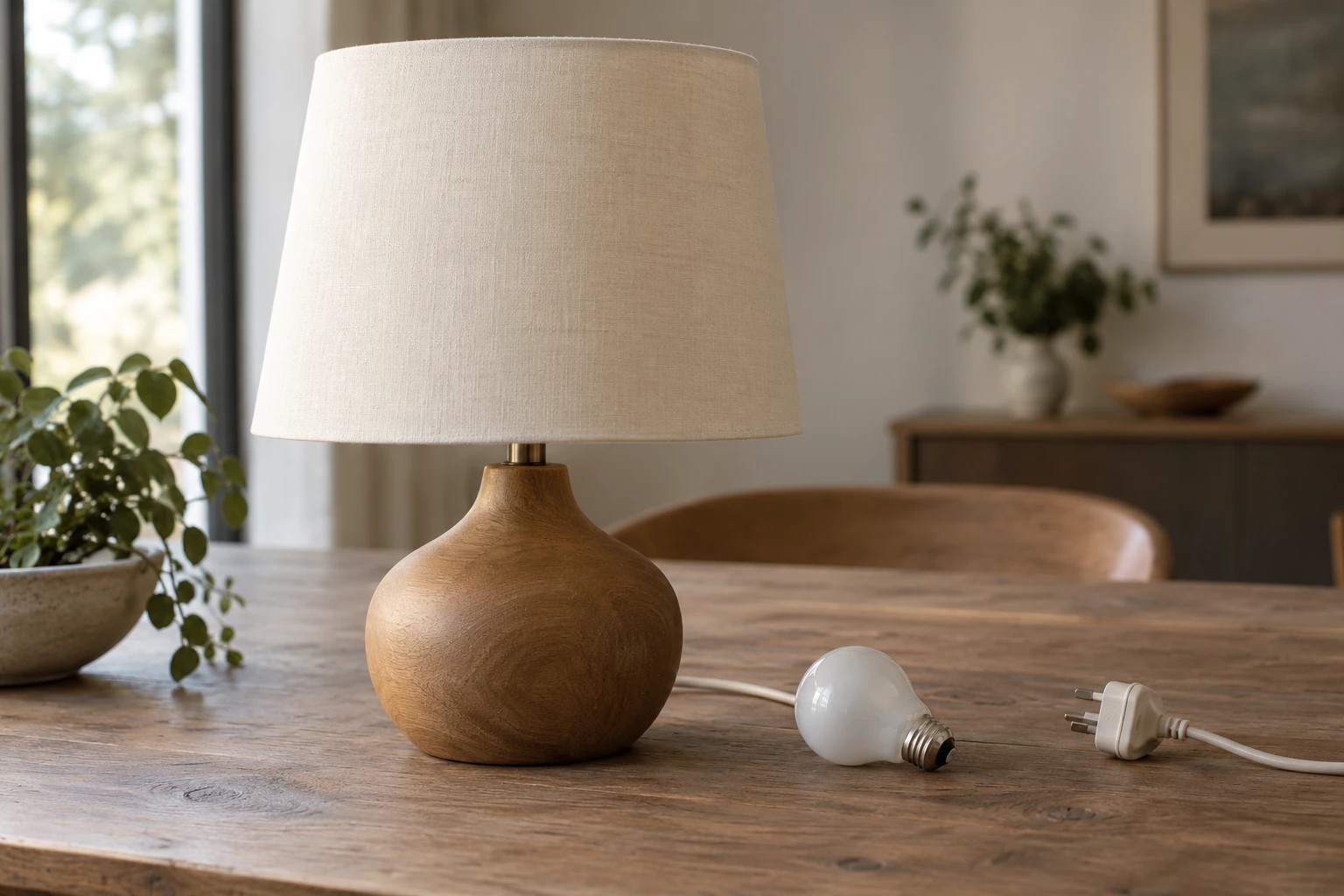
A delivered table lamp can still be missing the bulb decision that makes the room usable. Before describing it as ready to switch on, establish whether the order includes a bulb and connect the exact lamp variant to the requirements for the proposed bulb. If that connection is incomplete, say so in the room handover.
Table lamp bulb readiness is a purchasing and communication question here. This article does not install a bulb, energize a lamp or assess electrical suitability. The aim is to prevent a receiver from discovering an unspecified purchase or unresolved compatibility question after the room has been declared complete.
Find the regional lamp behind the room photograph
Start with the supplied lamp’s model and regional variant. Retain the supplier’s order reference and the applicable product instructions. A room image can confirm the intended appearance, but a similar base and shade do not identify the electrical version delivered to the recipient.
If the product link opens a different market or a newly selected variant, keep that difference visible. Ask the supplier for the instructions corresponding to the actual supplied article. Do not choose between conflicting requirements by taking whichever page offers the easiest bulb to buy.
A useful named example is IKEA’s US TVÄRFOT 004.675.26. Its product page states that the bulb is sold separately and provides a recommended bulb description. That establishes a separate-purchase requirement for this exact regional product. It does not supply a bulb recommendation for another table lamp. IKEA US TVÄRFOT product details
For the buyer’s actual lamp, the important result is a traceable match between the item and its instructions. “Same as the photograph” leaves that result unfinished even when the lamp has arrived in good visible condition.
Distinguish a missing item from an excluded purchase
Read the approved supply description before reporting a shortage. If the bulb was expressly included, an absent bulb is a delivery-scope question. Identify the promised component and ask the seller to resolve it. If the order excluded the bulb, the lamp delivery may match the order while the room-use plan remains incomplete.
A third case is an ambiguous bundle. The image contains a glowing lamp, but neither the selected option nor the contents list says whether a bulb is included. Ask for an explicit answer. Do not convert the styled image into a missing-item claim or quietly give the receiver the purchasing responsibility.
The distinction changes the next decision. An included-but-absent bulb calls for the agreed delivery remedy. An excluded bulb calls for an identified separate purchase and a clear decision about who arranges it. An unspecified bundle needs a contents answer before either route can be chosen. None of those answers can be supplied by recounting the base and shade cartons.
Give the proposed bulb its own identity
When a bulb is to be bought separately, record the proposed maker and full product designation rather than “standard bulb” or “warm white.” Attach the actual product information that the responsible reviewer needs to compare with the applicable lamp instructions. Keep appearance preferences separate from compatibility requirements.
A buyer may prefer a particular light appearance for a room. That preference is useful once the eligible options are established; it cannot resolve whether a chosen bulb meets the lamp’s requirements. Likewise, a bulb already available in a stock cupboard is only a candidate until its exact identity and suitability for this lamp are resolved.
If a supplier proposes a substitute for an included bulb, treat it as a named alternative. Ask what changed and obtain the appropriate product-specific answer before describing the new combination as complete. A lower price, matching shape or apparently matching fitting is not the missing compatibility evidence.
Do not create a universal bulb base, wattage or voltage rule for the range. Do not introduce adapters, rewiring or conversion as a shortcut. Keep electrical suitability and any eventual operation with the applicable instructions and appropriate competent review.
Use a lamp-to-bulb worksheet
Complete this original handover worksheet for each regional lamp variant and proposed bulb combination. It records a decision; it is not an installation checklist or a power-on test.
| Entry | What the buyer should establish | Status that remains honest when incomplete |
|---|---|---|
| Regional lamp variant | Exact article, intended market and matching instructions | Lamp variant or instruction match unconfirmed |
| Bulb supplied status | Included, expressly excluded, or unanswered in the order | Contents clarification required |
| Applicable bulb specification source | Identified lamp instruction and relevant requirement location | Requirement source missing or conflicting |
| Proposed separate bulb | Maker and complete designation; supplier information | Candidate not yet identified |
| Compatibility decision | Product-specific response for this lamp and this bulb | Compatibility awaiting responsible review |
| Remaining purchase | Who will obtain the identified item and whether that scope is agreed | Separate purchase still unassigned or outstanding |
| Recipient handover | What has arrived and whether use readiness remains unresolved | Delivered unpowered; bulb decision outstanding |
The last row should reflect the earlier rows. A complete lamp-delivery record cannot fill an unanswered bulb row by itself. Conversely, confirming the bulb’s purchase does not establish that any installation or electrical review has happened.
A fictional room marked complete too soon
Imagine four fictional guest rooms, each allocated lamp L-US. The approved order excludes bulbs, but a room setup sheet says “all lamps ready to switch on.” Four lamps have arrived. All names, quantities and replies in this example are invented, and no lamp is operated.
The buyer first corrects the setup sheet to “four lamps delivered; bulbs separately required; use readiness pending.” This preserves the successful delivery without telling the recipient to use an incomplete arrangement. It also avoids sending the supplier an unsupported shortage complaint for an excluded item.
The room team proposes bulb B1 because its appearance matches the staging photograph. The first response only names the colour appearance. The buyer keeps B1 pending and requests its full designation plus the relevant lamp requirements. Those are the missing purchasing inputs; another styled photograph would add little.
Suppose a responsible product-specific review later identifies B2 as an acceptable candidate for the actual lamp and explains that B1 has not been established as suitable. The buyer can authorize a separate B2 purchase, or accept an explicitly incomplete lamp handover while that purchase remains outstanding. The reviewer’s answer in this scenario is fictional, not a recommendation for any real bulb.
If the recipient needs lighting immediately, the buyer must resolve that requirement through an already established suitable provision or change the room-completion plan. Marking the lamp “ready” because the deadline has arrived would leave the original problem untouched. The procurement decision closes only when the agreed bulb scope and the remaining preparation responsibility are clear; that is still distinct from claiming a completed electrical check.
Make the recipient’s next step unmistakable
A concise handover note can identify the lamp, state whether a bulb is included, name any agreed separate bulb purchase and describe the remaining readiness question. Where the bulb remains absent or unresolved, keep the item unpowered and do not invite improvisation. A note should not turn “purchase identified” into “tested” or “approved for operation.”
Preserve the exact combination if the room team later changes a lamp variant or substitutes a bulb. Reopen the affected question rather than borrowing the earlier answer across a visually similar range. The useful handover is specific enough that the recipient knows whether there is a missing supply commitment, an outstanding purchase or a compatibility decision still to obtain.
See Homeware decor and ceramics for category context. In a Homeware sourcing enquiry, identify the regional lamp, the stated bulb inclusion and the unresolved purchase. Use an eligible marketplace link, a concise description or supported images. Agree any specialist review and technical-file exchange separately; the form does not establish electrical approval or accept PDF, CAD or ZIP uploads.
Frequently asked questions
Is a delivered table lamp ready to use if the bulb is sold separately?
Delivery can be complete against a bulb-excluded order while use readiness remains incomplete. Identify the exact regional lamp instructions, the proposed separate bulb and who is arranging that purchase. Keep the lamp unpowered while the bulb decision is unresolved; do not describe purchase identification as completed installation or electrical approval.
How do I tell whether a missing bulb is a shortage or my responsibility?
Compare the supplied contents with the approved order. A promised but absent bulb is a delivery-scope issue; an expressly excluded bulb is a separate purchase. If inclusion was never stated, request a clear contents answer before assigning responsibility. A styled image showing a glowing lamp does not settle the commercial scope.
Can I use a spare bulb that looks like the one in the photograph?
Treat the spare as a candidate only. Record its full product identity and compare it through the appropriate review with the exact lamp’s applicable requirements. Appearance preferences and a similar shape do not establish suitability. Do not introduce adapters, rewiring or conversion to bypass an unanswered compatibility question.
What should a handover note say while the bulb purchase is outstanding?
Name the lamp and regional variant, say whether a bulb was included, identify any agreed separate purchase and state the remaining readiness question. For example, a note can record delivery while leaving bulb purchase and use readiness pending. It should not imply that an installation, power-on check or electrical assessment has occurred.
Sources
Discuss a sourcing request related to this article.Table Lamp Handover: Resolve the Missing Bulb Before Room Use