
Cushion Covers or Filled Cushions? Quote the Right Refresh Option
Compare cover-only refreshes with complete cushions using the intended inserts, front and back treatments, opening details and actual supplied scope.
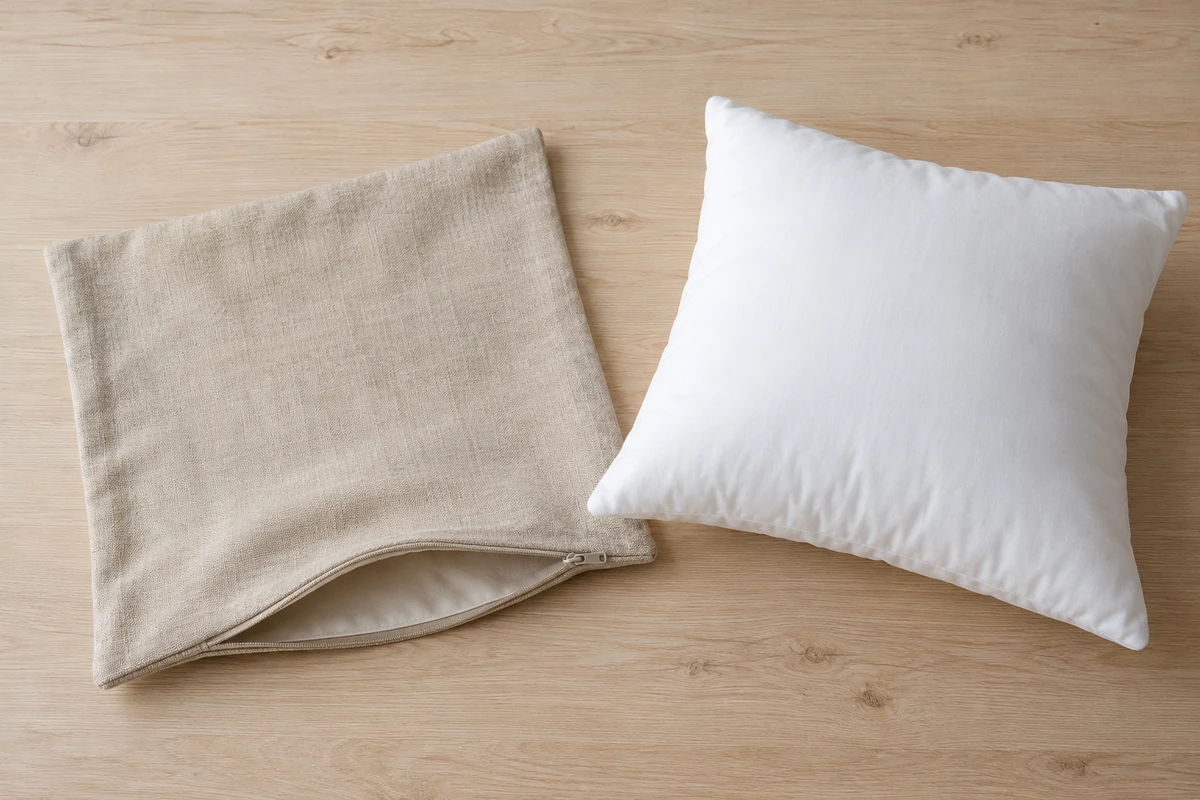
Decide which decorative cushion inserts you intend to keep before asking for new covers. A cover-only refresh and a purchase of complete filled cushions solve different needs. The RFQ should state the retained insert combination, the finished appearance and exactly what each supplier price includes.
This is especially useful when refreshing a café, furnished space or small retail assortment: the buyer may want a new colour or front treatment without replacing every insert. That possibility needs a matched-cover proposal, not an assumption that any cover of the same advertised size will work.
Make the retain-or-replace decision explicit
Inventory the existing inserts by reference, stated size and relevant shape. The buyer should decide which will remain in service; this article does not assess the condition or suitability of an individual used insert. Keep uncertain or missing inserts in a separate group rather than counting them as available.
For the retained group, record the actual insert information the cover supplier needs. Preserve any manufacturer size designation and give dimensions with units and the agreed measurement basis. Add an image if shape or corner form matters. Do not invent a universal ratio between insert size and finished cover size.
For a group needing new inserts, request the insert as an identifiable supplied component. Ask what the supplier is offering and whether it is priced separately, included inside the cover or supplied alongside it. A filled-looking listing image does not establish that an insert comes with the product.
Separate the cover offer from the insert offer
IKEA’s SANELA 005.911.30 page identifies the product as a cushion cover, presents an inner cushion separately under “Complete with,” states a compatible inner-cushion size and describes a removable zippered cover. That is a useful example of distinguishing the purchased cover from its matching insert. It does not establish the fit of a marketplace cover or a rule to oversize every insert. IKEA SANELA product details
Ask a supplier to make the same scope clear in its quotation. Use separate entries for cover-only, insert-only and the proposed complete combination when more than one is being considered. Preserve the model and size of both parts so that a later sample can be matched to the price.
If a supplier proposes a different insert to achieve the requested appearance, treat that as an alternative to the retained-insert plan. Ask what changes in the cover, the insert, the supply quantity and the packed proposal. Do not let a demonstration sample quietly replace the buyer’s existing inserts with a different combination.
Specify the complete cover, including the back
Describe the front and back separately when they differ. A patterned front may be paired with a plain back, a different fabric or a different orientation. Identify the desired material/appearance reference for each face, plus piping, flanges or other visible edge treatment where required. A front photograph leaves those questions open.
Ask where the opening sits and what access it provides for the intended insert. The supplier should state the finished cover dimensions, opening type and relevant opening dimensions. A zip exists as a feature only when it is actually included in the quoted design; a decorative seam in a photograph should not be recorded as a closure.
If the buyer wants a removable cover, review the proposed cover-and-insert combination as supplied. Keep any difficulty or proposed design change in the sample record. There is no need to prescribe a stuffing technique or modify the retained insert to turn an unsuitable proposal into an apparent match.
Care and dimensional change need a separate agreed basis. The Homeware textile sourcing guide covers that wider review; do not use an initial appearance approval to imply that the same combination has already been reviewed after care.
Use a refresh-options worksheet
Prepare one requirement for each retained insert group and appearance variant. The final columns make it clear whether a quoted item can be compared with a cover-only plan.
| Decision | Cover-only refresh | Complete-cushion alternative |
|---|---|---|
| Insert identity | Buyer’s retained insert reference and dimensions | Supplier’s proposed insert reference and dimensions |
| Cover fit | Proposed cover size matched to the retained insert | Proposed cover size matched to the supplied insert |
| Front and back | Defined face materials, pattern direction and edge treatment | Same appearance requirement, with any change declared |
| Opening | Type, location and access for the retained insert | Type, location and access for the proposed insert |
| Supplied quantity | Number of covers; no new inserts unless listed | Cover count and insert count stated separately |
| Sample combination | Quoted cover reviewed with the retained insert | Exact quoted cover and insert reviewed together |
| Packed and priced scope | Actual cover-only pack and quoted costs | Actual complete-product pack, assembly scope and quoted costs |
Keep any stock-versus-custom cover change visible within the relevant option. A plain stock back and a custom printed back are different appearance proposals even if the front is unchanged. Ask for the price difference only after the supplier identifies the changed construction or treatment.
Twenty fictional cushions and two unlike quotations
An invented café plans to refresh twenty decorative cushions. It has twenty inserts that it has decided to retain, all identified as its 50 by 50 cm group. The desired appearance is eight striped-front covers and twelve plain covers, with the backs specified separately. All quantities, dimensions and supplier replies below are fictional.
Supplier A quotes twenty covers divided into the requested two appearance variants. Supplier B quotes twenty filled cushions but does not identify the included insert or state whether the cover is removable. These prices cannot yet be ranked as two offers for the same refresh.
The buyer asks A to confirm the cover dimensions and opening proposed for the retained inserts, and to provide a sample of each distinct cover construction. A’s offer follows the intended reuse plan, but the buyer still needs to establish the matched appearance and access rather than assuming the size label settles fit.
The buyer asks B for the insert identity and cover details, plus a cover-only quotation if that option is offered. If B supplies only filled cushions, keep it as a complete-replacement alternative. The extra inserts should remain visible in the comparison; they are not a required benefit merely because they are included.
Suppose A’s sample is reviewed using a different display insert. That observation cannot settle the retained-insert combination. Request the relevant combination before counting A’s proposal as the accepted refresh option. Likewise, a successful fit observation for the plain cover does not automatically resolve a striped cover with a different back or opening.
The final decision could be a cover-only refresh, complete replacement or a split order if the buyer changes the retained-insert plan. No option is assumed cheaper. Compare the actual item, packing and delivery quotes after the product combinations are clear, and document why any newly purchased inserts are needed.
Compare the delivered proposals without assuming compression savings
Ask for the packed configuration that the supplier actually proposes for each option. Covers packed separately, inserts supplied separately and complete cushions packed as assembled products are different shipment descriptions. Use their quoted packed quantities, dimensions and mass when evaluating delivered cost.
Do not promise that compressing a filled cushion will achieve a particular saving or preserve its presentation. If a supplier proposes compression or another packing change, request the relevant packing and product information and have the buyer review whether that proposal is acceptable. The item comparison should not depend on an unverified freight assumption.
Keep any work required after delivery explicit. If covers and inserts arrive separately, ask who is expected to supply the finished combinations. A price for loose components should not be described as a price for ready-to-display cushions unless that work is included.
Write the refresh scope in the request
A compact brief can say: “We intend to retain [insert references and sizes]. Quote [quantity by appearance variant] removable covers proposed for those inserts. Identify finished cover size, front/back treatment and opening details. State whether any insert is included. If recommending a different insert, quote that complete combination as a separate alternative with its actual packed scope.”
Start with the Homeware textile category, then send the product reference and refresh brief through the Homeware sourcing page. Image previews can show the existing insert and the requested front/back appearance; label which question each image supports. Choose the proposal that supplies the agreed combination, with its remaining fit or scope questions resolved before treating the prices as equivalent.
Frequently asked questions
Do wholesale cushion covers include inserts?
Some offers are for covers alone and others supply a complete combination, so ask the seller to list the cover and insert explicitly. Record the size and identity of each included component. A full-looking photograph or the word cushion in a title should not replace a written statement of what the price includes.
What insert dimensions should I send when ordering covers?
Send the retained insert’s stated size, actual relevant dimensions with units, shape information and the measurement basis. Keep its reference available for the sample review. Ask the supplier to propose the matching finished cover and opening; avoid a universal rule that every cover requires an insert a certain amount larger or smaller.
Can I compare cover-only and filled-cushion prices directly?
Compare them as different purchase options, with the extra insert and any assembly or packing differences visible. For a retained-insert refresh, request a cover-only price where available. Use actual delivered quotes for the resolved scope rather than assuming that included inserts are necessary or that one packing arrangement must be cheaper.
What should I specify for a custom cushion cover front and back?
Identify the material and appearance required on each face, pattern direction where relevant, edge treatment and opening location. State whether the reverse may use a standard plain fabric or must match the front. Request the complete cover sample for the intended insert so a front-only image does not become approval of an unspecified back.
Sources
Discuss a sourcing request related to this article.Cushion Covers or Filled Cushions? Quote the Right Refresh Option