
Buy Dish-Brush Refills for the Handles You Can Keep
Separate matched brush heads for retained handles from complete brushes for new positions, then compare actual refill-pack quantities and extras.
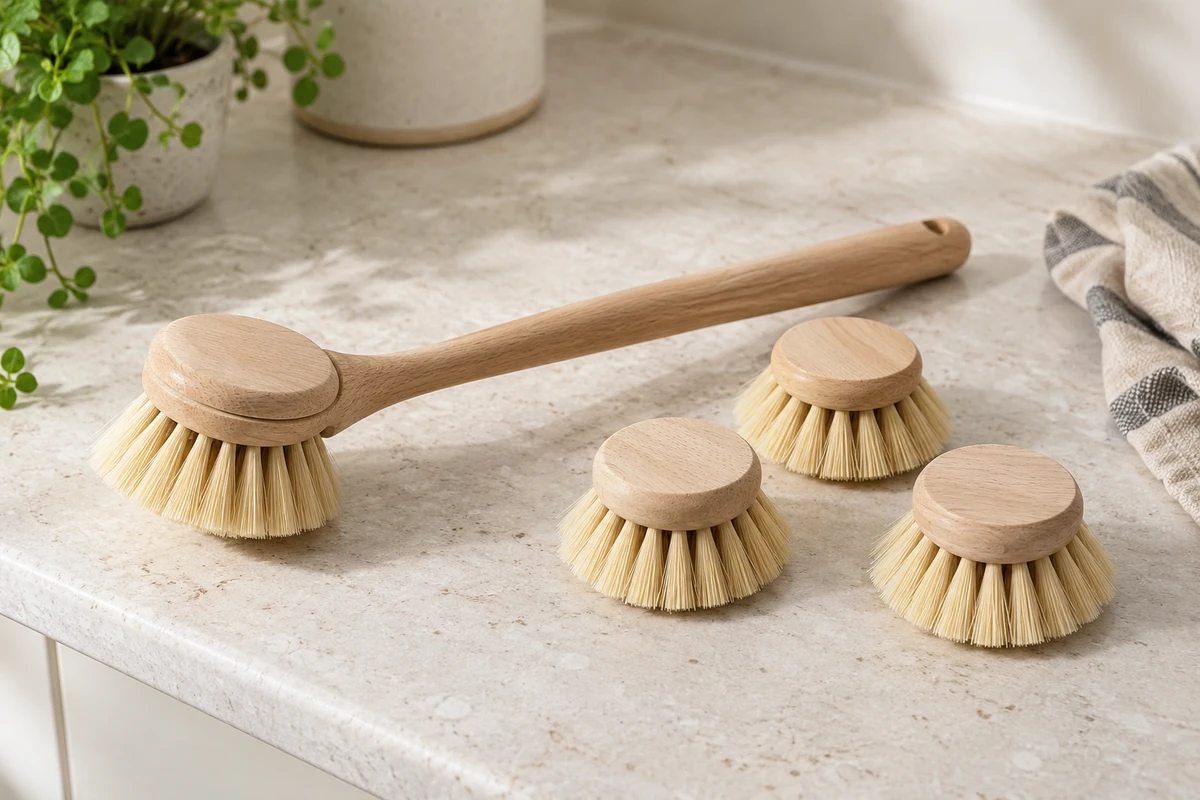
Buy dish brush refill heads for identified handles that can remain in use, and buy complete brushes for positions that genuinely need a new tool. Combining those needs into one brush count can add unwanted handles or leave a new sink position with a head but no handle.
A useful dish-brush refill decision therefore begins at the handle. Establish the retained handle group, its matched replacement head and the separate requirement for complete brushes. The calculation assumes that retention and product suitability have already been resolved under the actual instructions; it does not inspect, repair or approve a used handle.
Make the handle group the starting point
Record the exact handle or complete-brush reference from existing product information. Keep different models separate, even when their heads appear similar. A familiar brand name, round head or shared material description does not establish the interface between the proposed refill and the handle.
IKEA sells VÄLVÅRDAD refill 104.905.26 separately and links the VÄLVÅRDAD dish brush from that product page. That named pairing illustrates a replaceable-head commercial format. It supplies no evidence that the refill matches another maker’s handle or that an unidentified brush uses the same arrangement. VÄLVÅRDAD refill listing
For the actual purchase, ask the seller to identify the offered refill against the retained handle reference. If there are two handle groups, ask for two answers. Do not silently merge them because the same head photograph appears in both offers.
An unidentified handle has an identification question before it has a refill quantity. Leave it outside the confirmed group while seeking the missing product information. Do not bend, adjust or force a connection to turn a candidate head into a compatible one.
Separate replacement heads from new complete tools
Write down how many retained, eligible handles currently need a head. This is the refill requirement. Then identify new sink positions, missing complete tools or handles that have already been retired under an appropriate decision. These create a separate complete-brush requirement.
The distinction is physical, not just administrative. A refill answers the head requirement for a handle already present. It does not add another independently complete brush unless the necessary compatible handle is also supplied. Conversely, a complete brush bought solely to obtain its head adds another handle that the original plan did not require.
Avoid counting the same sink twice. If a new complete brush replaces a retired handle and head, do not also include a refill for that retired handle. If a retained handle will continue at the same sink, do not count that sink as new merely because its head is being replaced.
Keep optional spare heads distinct from heads needed now. A buyer may choose spares, but the chosen number should remain an explicit reserve decision. Neither the number of sinks nor the word reusable provides a replacement interval or a universal spare quantity.
Ask what the seller means by one refill
A product title using refills may describe the replacement category rather than the count inside a purchase unit. Obtain the actual number of heads in the pack and the exact reference supplied. Do not infer two heads from a plural title or one head from a single-object photograph.
For a complete brush, confirm whether its head is included and whether the quoted model is the intended one. A handle-only offer belongs in a separate candidate column, with the matched head requirement still shown. This prevents a low handle price from being compared with a complete tool price as though both cover the same sink.
Ask for real selling increments. If heads are available only in a fixed pack, calculate the purchased quantity from that pack. If loose heads are not offered, retain that limitation rather than describing the exact-count alternative as available.
Compare the two purchases in one worksheet
Use this original decision sheet to show how each offered combination meets the same household need. It is not a care assessment, service-life forecast or performance test.
| Field | Retained-handle requirement | New complete-brush requirement |
|---|---|---|
| Product reference | Exact handle and matched head | Exact complete brush proposed |
| Required positions | Handles needing a replacement head now | New or replacement complete-tool positions |
| Seller purchase unit | Heads per actual refill pack | Complete brushes per actual pack |
| Components acquired | Head count and any included extras | Handle and head counts |
| Unneeded components | Extra heads after the refill need | Extra handles created by using complete tools as head supply |
| Open question | Pairing, quantity or retention basis | Complete contents or model selection |
| Care reference | Applicable guidance for the selected item | Applicable guidance for the complete tool |
Keep an unresolved retention decision out of the confirmed refill total. It can appear as a separate conditional row: one possible retained handle, pairing known, retention not yet established. That describes the remaining work without inventing a disposal or purchase decision.
Fictional choice for four handles and one additional sink
Suppose four identified, eligible handles remain in a household. Each needs a matched new head. A fifth sink position has no brush and needs one complete tool. All quantities, model references and proposed seller formats in this example are fictional.
Offer R supplies four matched heads and one complete brush. Its total contents are five heads and one handle. Four heads restore the retained tools, while the complete brush answers the new position. There are five planned complete tools and no extra handle arising from the purchase.
Offer C supplies five complete brushes. It contains five heads and five handles. If the buyer keeps the four existing handles, four of the newly bought handles are beyond the current requirement. Alternatively, using all five new complete brushes leaves the four retained handles without a role in the plan. Either route creates the same surplus-handle decision; changing which handles are used does not erase it.
The buyer selects R as the preferred component arrangement, subject to its actual pairing and commercial response. No price saving or waste-reduction measurement is asserted. The result is simply that R supplies the requested replacement heads and new tool without purchasing four additional handles.
Now suppose the fictional refill seller answers that heads come only in three-head packs. Two packs plus one complete brush supply seven heads and one handle. Five heads have current assignments, and two remain as spares or surplus. The buyer must compare that known remainder with C’s extra handles using actual offers and the household’s storage constraints.
If only three of the four old handles are confirmed eligible, revise the plan before buying: three replacement heads and two complete brushes may be the relevant requirement. Do not leave the fourth handle in the refill calculation while also adding a complete replacement for its sink.
Let care information constrain the spare plan
Extra heads need a suitable place within the household’s actual care and storage arrangements. The named VÄLVÅRDAD brush guidance says not to leave its head standing in water and to let a damp brush air-dry rather than place it in a cupboard. This applies to that item; it is not a general cleaning method for other brushes. VÄLVÅRDAD brush guidance
The purchasing consequence is to avoid assuming that every wet used head is immediately available as a stored spare. Follow the actual guidance for the selected item, and keep new stored heads distinct from used ones whose status is unresolved. This article supplies no hygiene assurance, drying time, dishwasher permission or refurbishment procedure.
For the next purchase, record actual head use and the handle group that remains. A prior six-head pack is a commercial quantity, not evidence that six more will be needed at a fixed interval. Refresh the household requirement instead of repeating the largest previous order.
See Homeware kitchenware for broader context. A Homeware sourcing enquiry can name the retained handles, matched refill request and new complete-tool positions using an eligible product link, description or permitted image. Ask for the actual head count per pack and complete-brush contents so the reply answers both requirements clearly.
Frequently asked questions
How many dish-brush refills should I buy for existing handles?
Start with identified handles that are already eligible to remain in use and actually need a matched head. Keep new complete-tool positions separate. The refill count is not automatically the number of sinks or the quantity bought last time. Request the real head count per pack and show any additional purchased heads as an explicit remainder.
Does a refill brush head replace a complete dish brush?
It answers the head requirement only when a compatible, suitable handle is already available for that position. A new sink with no tool still needs a complete brush or a separately confirmed handle-and-head combination. Keep both components visible in the offer so a handle-only or head-only price is not mistaken for a complete-tool price.
Can I use a similar-looking refill on a different handle?
A similar outline is insufficient to establish the intended pairing. Use the exact retained handle reference and matched manufacturer or supplier information. Keep different models separate and seek clarification for unidentified handles. This purchasing method does not authorize bending, adaptation, forced fitting or an informal trial to establish compatibility.
Do spare brush heads establish a replacement schedule?
No. A pack quantity is a commercial format, not a useful-life statement. Base the next requirement on actual household needs and applicable care information. Keep new spare heads distinct from damp or used heads whose storage status is unresolved. No fixed wear interval, hygiene result or dishwasher permission is established by this comparison.
Sources
Discuss a sourcing request related to this article.Buy Dish-Brush Refills for the Handles You Can Keep