
Reorder Bookcase Shelves by Model and Purchase Generation
Separate retained bookcases by their documented generation before requesting loose shelves, included supports and any unresolved older-unit alternative.
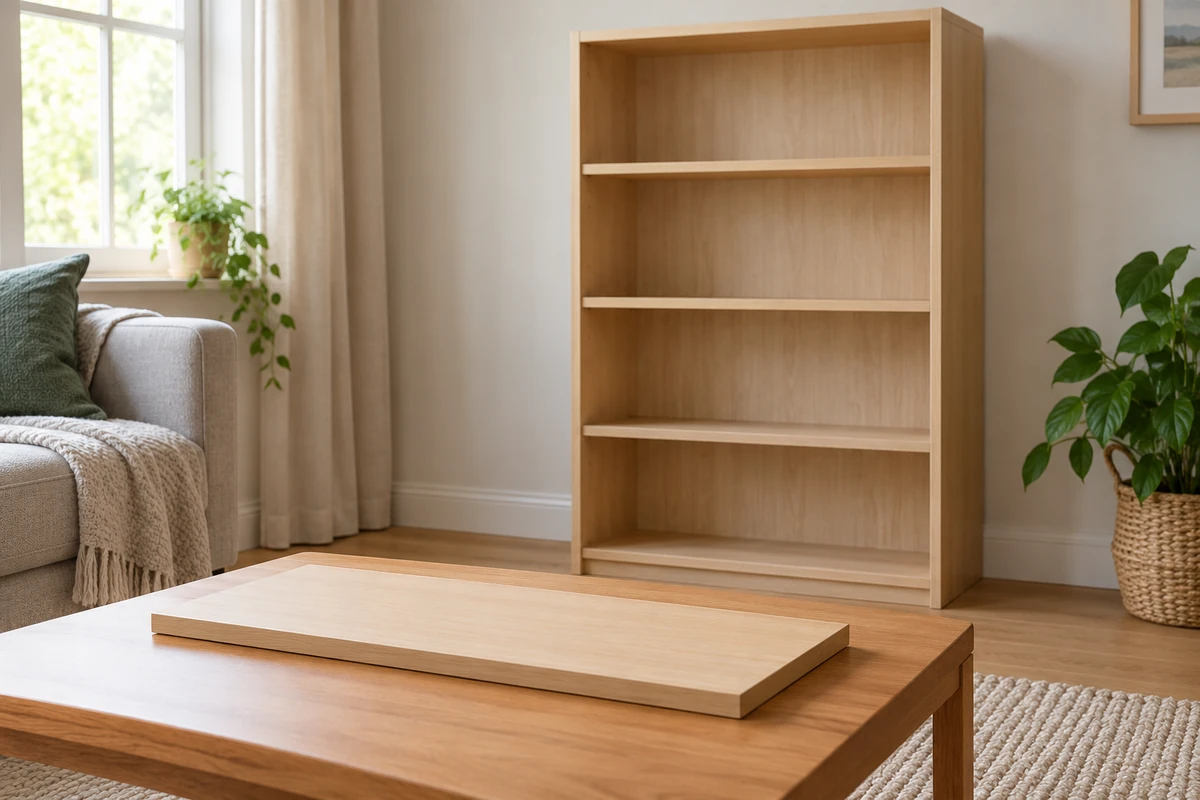
An extra shelf with the right family name can still be the wrong repeat purchase for an older bookcase. Separate the retained bookcases by exact model, dimensions and documented purchase generation before counting the shelves to order. A current catalogue title is not evidence of backward compatibility.
For a shelf reorder, the question is whether an individual shelf offer covers each retained bookcase. It can preserve a suitable existing unit without buying another complete case, but it cannot establish that every older version accepts the current shelf. Installation, loading and any physical alteration remain outside this purchasing comparison.
Give each retained generation its own row
Start with the bookcases the owner plans to keep. Record the model reference and the width and depth used by the manufacturer to identify that case. Keep those case dimensions separate from the loose shelf’s own dimensions; the two products are described at different boundaries.
Look for existing purchase records, product references or other attributable generation evidence. Record what is known and what remains unidentified. An approximate memory of when the room was furnished should not silently become an exact model-year confirmation.
If several cases share a familiar series name, do not pool them until the proposed shelf’s applicability has been checked for each group. One group may have a documented current match, another may fall within an explicit exclusion, and a third may lack enough information. Their shelf quantities need different treatment even if all the cases look similar from the front.
Preserve an explicit older-generation exclusion
IKEA’s UK BILLY extra shelf 202.653.01 identifies BILLY bookcases 80 cm wide and 28 cm deep as its intended case size. The same page excludes bookcases purchased in spring 2014 or earlier and states that shelf supports are included. These boundaries belong to that exact UK item. BILLY extra-shelf product information
The useful lesson is that dimensions and generation can both matter. A case satisfying the stated width and depth does not cancel the published date exclusion. Equally, the exclusion does not prove that every shelf in the wider series is unavailable for all older cases; it establishes that this particular offer is not the answer for that excluded group.
For an unknown supplier’s product, obtain its own applicability statement. Do not transfer the named manufacturer’s date boundary to a different range. If the response refers only to “standard bookcases,” ask which exact retained references and generations it covers.
Separate a shelf need from a whole-bookcase need
State whether the owner needs an additional shelf position within an approved arrangement or a replacement for an identified shelf. That distinction explains the requested component, without deciding that the bookcase may be loaded differently or that a changed arrangement is suitable.
Then list any genuinely separate demand for complete bookcases. A missing loose shelf does not itself create that demand. If no suitable loose component can be established, a different complete bookcase may become an alternative for the owner to evaluate, but that is a changed purchase scope with consequences beyond the component price.
Do not assume that two matching-looking loose shelves can be interchanged across generations. Nor should a seller’s willingness to ship a shelf be recorded as confirmation that it belongs in the retained case. Keep “offered,” “applicability established” and “purchase chosen” as separate statements.
Confirm the complete loose-shelf offer
Ask for the shelf reference, finish, purchase unit and included support components. If supports are described separately, determine whether they are included in the quoted unit or require another established order line. Do not count unidentified spare supports as an automatic substitute.
Appearance is another decision. A current finish name may not promise a visual match to an older retained case. Ask what the seller actually offers and have the owner decide whether a difference is acceptable. This article does not claim that age necessarily changes a finish or that a new part will match it.
Where a supplier proposes adaptation, keep that proposal outside the reorder. No drilling, changed supports, trimming or trial loading is authorized by the quantity comparison. Request an appropriate product-specific route rather than turning an unsupported component into a supposed match.
Use a generation-based shelf worksheet
| Worksheet entry | Evidence or answer needed | Purchasing result |
|---|---|---|
| Retained bookcase model | Exact reference from existing records | Establishes which case is being kept |
| Actual case width and depth | Manufacturer-defined size for that reference | Screens the stated case-size scope |
| Purchase generation | Attributable date or generation evidence | Checks explicit exclusions |
| Proposed loose shelf | Current item and finish reference | Keeps the offer distinct from the case |
| Support contents | Actual included components and any separate requirements | Defines a complete component offer |
| Matched shelf requirement | Quantity for cases whose applicability is established | Supports the bounded reorder |
| Older or unidentified cases | Separate quantities and missing answers | Prevents unsupported pooling |
This is an original purchase worksheet, not an engineering assessment. It should name the unresolved generation question rather than demand a buyer-created physical test to close it.
Fictional example: two similar cases, one eligible offer
Imagine two retained bookcases, A and B, with the same family name and nominal case dimensions. Each needs one loose shelf within an already reviewed arrangement. For this fictional exercise, A’s documented purchase generation falls within the offered shelf’s stated scope; B’s falls within its explicit older-generation exclusion. All references and decisions are assumed for teaching purposes.
Ordering two current shelves would not resolve both needs. The supported request is one current shelf for A, with its confirmed included supports, while B remains an unresolved separate requirement. The two-case visual similarity does not change that result.
The buyer asks whether a documented shelf option exists for B’s actual generation. If a seller returns an older listing without confirming a current offer, keep availability unanswered. If it offers a different shelf without an applicability statement, keep the match unanswered. Those gaps require different responses.
Suppose no supported component option is returned. The owner can keep B’s shelf request open or consider a separately reviewed whole-bookcase alternative. It should not buy a new complete case merely because the worksheet has an empty cell, and it should not assume the current shelf can be modified to fit B.
If A’s offer is chosen separately, preserve the one-shelf scope. Do not describe the combined two-case requirement as completed. This allows the supported part of the purchase to remain clear without concealing the older unit’s outstanding decision.
Send the generation question with the component request
Give the seller the retained model, case size, generation evidence, desired shelf count and the exact candidate reference. Ask for current contents and applicability, and identify excluded or unknown cases explicitly. A simple “two BILLY shelves” would lose the distinction the buyer has just established.
See Homeware baskets and storage for broader context. A Homeware sourcing enquiry can carry a supported product link, compact description or permitted images. Confirm any specialist review separately. The enquiry supplies neither an installation service nor permission to alter a shelf or bookcase.
Frequently asked questions
Can I reorder a bookcase shelf by series name alone?
Use the exact retained model, case dimensions and any generation boundary attached to the proposed shelf. A shared series name does not cancel an older-version exclusion. Keep cases with unknown generation separate until the actual applicability question has been answered.
What if my bookcase has the listed dimensions but is an older version?
Preserve both conditions. In the named BILLY UK example, the specified case size coexists with an explicit exclusion for spring-2014-or-earlier purchases. Ask for a documented alternative for the actual older case; matching dimensions alone do not establish that the current shelf fits.
Should shelf supports be part of the replacement order?
Request the complete contents of the exact loose-shelf offer and record whether supports are included or separately required. The named example includes supports, but another seller’s offer must answer for itself. Do not substitute unidentified spare hardware or infer an adaptation permission.
Does an unavailable loose shelf mean I must replace the whole bookcase?
It creates an unresolved component-supply decision, not an automatic whole-unit purchase. The owner can seek another documented component option or consider a separately reviewed complete-bookcase alternative. Keep its changed scope and actual cost visible, and do not assume a current shelf may be modified to fit.
Sources
Discuss a sourcing request related to this article.Reorder Bookcase Shelves by Model and Purchase Generation