
Bamboo Board Handover: Resolve the Cleaning Route Before Use
Match the finished bamboo board to its actual care instructions, then decide whether the household can support a separate handwashing route.
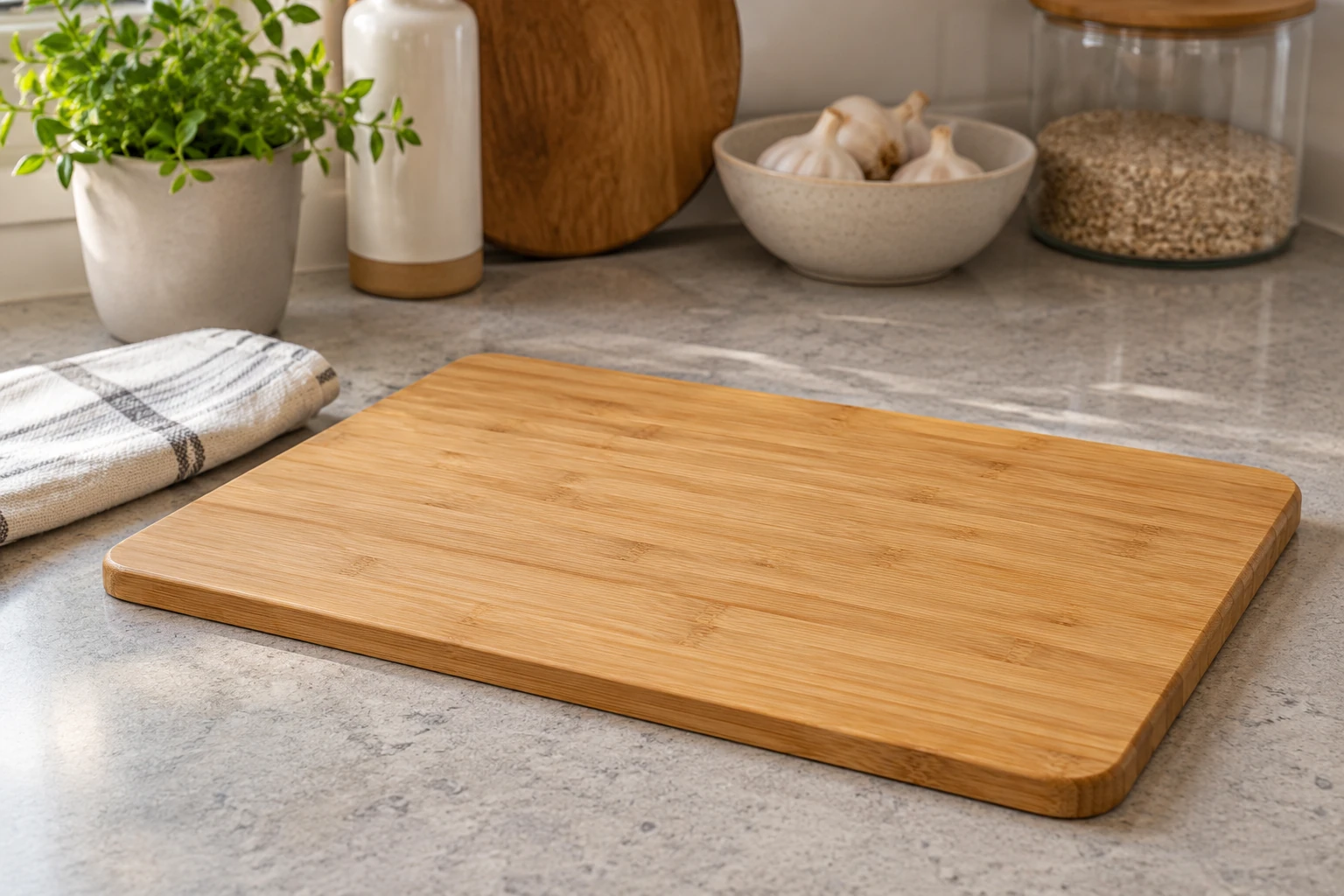
A bamboo board specified for handwashing needs a real place in the household’s cleaning routine. If everything normally enters the dishwasher, a care leaflet left in the box does not resolve that conflict. Before the board joins ordinary use, decide whether a separate permitted route is practical or whether a different product is needed.
A useful cleaning handover connects the exact finished bamboo board, its current care directions and the person who will use and clean it. It does not prescribe a universal bamboo treatment, a sanitising method or a durability test.
Read the finished board’s instructions first
Keep the manufacturer, full model and selected variant with the care information. The word bamboo identifies only part of the product description. It is not enough to select cleaning instructions for every finished board carrying that word.
IKEA’s APTITLIG board 802.334.30 is a specific example: its product page specifies handwashing only. That statement governs the named finished board. It should not be copied as evidence for another supplier’s product. IKEA APTITLIG care information
For the board actually being handed over, ask which instruction matches the delivered version. Preserve the full care source, including relevant first-use and ongoing requirements, rather than selecting a single favourable sentence. If the seller supplies guidance for a different board or only a general material article, the match remains unresolved.
An intact arrival appearance and a suitable preparation area answer other purchasing questions. They do not override the actual cleaning limitation. Equally, a board that fits physically inside a dishwasher has answered only a space question, not whether it belongs in that cleaning route.
Find the point where the household makes the wrong choice
Describe what normally happens after a board is used. Who clears it, where is it placed, and what tells the next person how it is to be cleaned? The handover should address that decision point, not simply add another document to the purchase record.
A shared clearing area can make unlike boards appear interchangeable. Ask how the identified handwash-only model will remain recognizable to everyone who clears or cleans it. Use an agreed location or accompanying care information appropriate to the household; this article does not authorize applying stickers, paint or other materials to the board.
Confirm whether someone can actually undertake the product’s permitted care. “We can handwash it” is incomplete when nobody expects to handle that task, the board cannot be accommodated in the intended arrangement, or a relevant care question is unanswered. Keep practical availability separate from the permission in the instruction. Both matter to the buying choice.
No dishwasher trial is needed. One cycle would change the board’s condition without establishing that repeated use is permitted, and a visually unchanged result would not rewrite the manufacturer direction. Resolve the workflow rather than trying to disprove the restriction.
Compare three honest handover choices
Retaining the board is a coherent choice when the household accepts and can follow its applicable care route. The handover then needs to make that route recognizable at the point where the board is cleared. The buyer should confirm understanding with the people who will actually handle it.
A different allocation can also be considered. A board intended for a particular household task might be reassigned to another genuine, supported role or recipient, but the care requirement travels with the board. Reassignment is not a way to erase that requirement or imply that serving use needs no cleaning.
If a separate route cannot be supported, reconsider the selected product for this household. Obtain actual care information for any alternative. A different material name or a seller’s generic washable description is insufficient evidence that the replacement suits the intended dishwasher routine.
Use a care-route fit worksheet
Fill this original decision aid before giving the recipient a “ready to use” summary. It compares a household arrangement with the product’s instructions; it is not a cleaning recipe.
| Question | Entry for the selected board | Handover consequence |
|---|---|---|
| Which finished board? | Exact maker, model, variant and care reference | Prevent another board’s care sheet from being substituted |
| What cleaning route is stated? | Applicable instruction and any unresolved conditions | Keep a handwash-only item outside the assumed dishwasher route |
| What happens in this household? | Clearing point, intended handler and usual route | Identify the moment the wrong route could be chosen |
| Is a separate permitted route available? | Recipient’s actual arrangement, or a named gap | Retain the board only on a supported practical basis |
| What surface-treatment question remains? | Exact unanswered requirement and source | Keep it separate from routine cleaning permission |
| What has the buyer chosen? | Retain with the agreed route, reconsider the allocation or seek an alternative | Make an unresolved decision visible before use |
Record unknowns plainly. A handwashing instruction does not supply a complete household hygiene programme, and this worksheet cannot establish one. Where the intended setting imposes additional requirements, those belong with the responsible reviewer and the actual product evidence.
A fictional board beside the dishwasher intake
Suppose an invented household receives board B12 with matched handwash-only instructions. The board’s dimensions and received condition have already been addressed. The buyer places it in the same clearing area as boards routinely loaded into the dishwasher, while the recipient note says only “new bamboo board.” This example is fictional and describes no actual care operation.
The household first considers keeping B12 with a separate handwashing arrangement. The person who clears the kitchen agrees to distinguish it, but the person who normally cleans the boards has not accepted a different route. The buyer leaves the handover incomplete rather than treating one person’s acknowledgement as a workable household plan.
After discussing the actual routine, suppose the household decides that a separate route is impractical. The buyer removes B12 from the proposed allocation and asks for an alternative whose exact care instructions support the intended cleaning arrangement. The replacement remains a proposal until that match is checked. B12 is not put through a dishwasher cycle to determine whether the inconvenience can be ignored.
The outcome is a product-and-routine decision. Nothing in it establishes that B12 is defective or that another board is hygienically superior. Had the household accepted an appropriate separate care arrangement, retaining B12 could have answered the original buying need without changing its manufacturer’s instructions.
Keep surface treatment as a separate unanswered question
A routine-cleaning instruction and a surface-treatment requirement serve different purposes. If the actual board instructions include treatment, retain that requirement and obtain any missing product-specific details. Do not invent an oil type, application method, amount or schedule from the material description.
Avoid a recipient note that collapses both subjects into “wash and oil as usual.” The next person may have a different meaning for usual. Point to the applicable guidance and identify any detail still requiring clarification. An unresolved treatment question should not be disguised by a confident routine-cleaning summary.
For category context, see Homeware kitchenware. A Homeware sourcing enquiry can describe the exact board and the household’s cleaning-route conflict, using a supported marketplace link, text or image. Ask what clarification the provider can obtain; do not assume the enquiry includes a hygiene assessment or an independent care test.
Frequently asked questions
Can a handwash-only bamboo board join the dishwasher load once?
Do not use a one-cycle trial to resolve the conflict. The applicable handwashing instruction remains the basis for that product even if a trial might leave it looking unchanged. Decide whether the household can follow the permitted care route or needs a different identified board with guidance that matches its intended routine.
Is handwashing the rule for every bamboo cutting board?
Use the instructions for the exact finished product rather than generalising from its material name. The APTITLIG example establishes a named board’s requirement only. Obtain the delivered model and variant’s current care information, and leave another board’s cleaning permission unresolved if the seller cannot provide the matching source.
What if two people share clearing and cleaning duties?
Make the identified board and its applicable care route recognizable to both people. Confirm that the separate arrangement is genuinely practical at the clearing point and that the intended handler understands it. One person’s agreement does not settle a shared routine if the next person will reasonably assume the board belongs in the dishwasher.
Should the handover specify which oil to use?
Only carry forward treatment details supported by the actual board guidance and any required product-specific clarification. Keep surface treatment separate from ordinary cleaning permission. This article provides no oil selection, amount or interval, and a broad instruction to oil bamboo does not establish what the recipient should apply to this finished board.
Sources
Discuss a sourcing request related to this article.Bamboo Board Handover: Resolve the Cleaning Route Before Use